
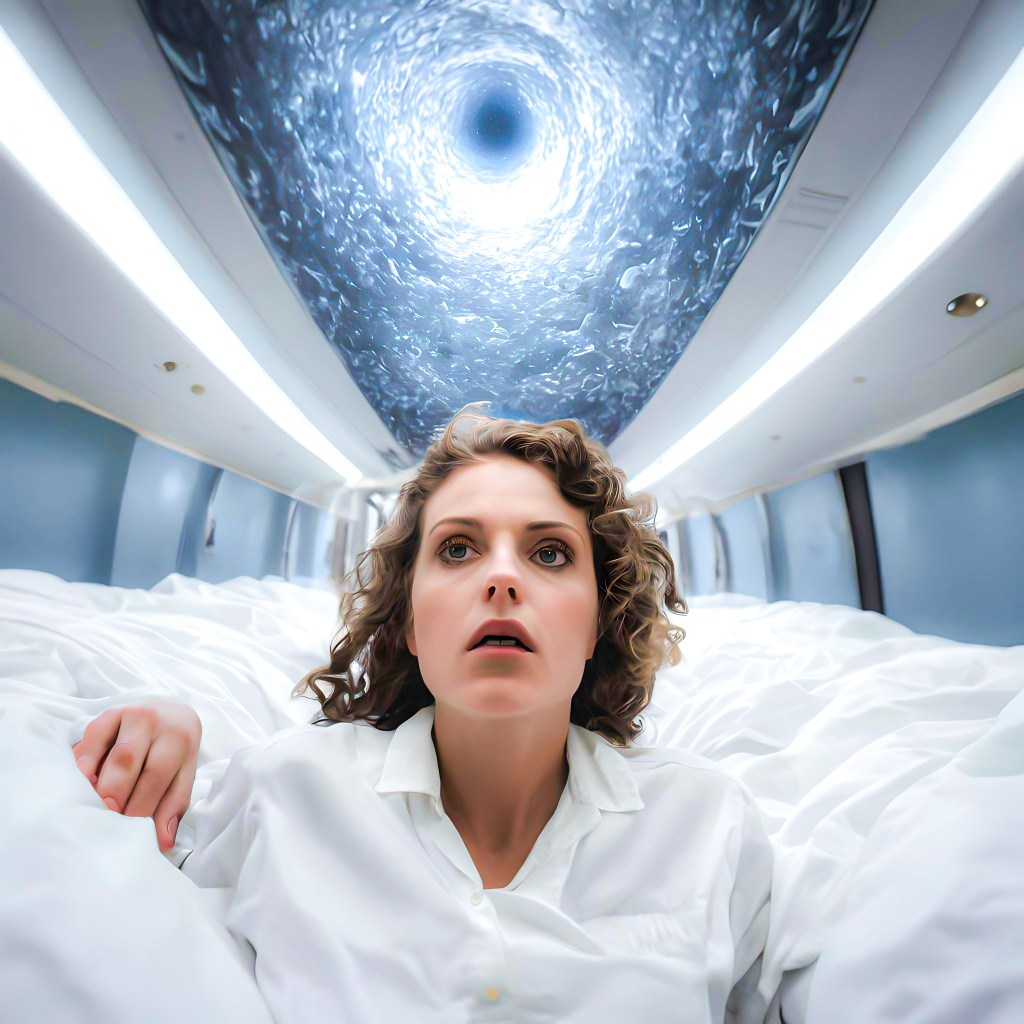
Overview of peer-reviewed evidence and a logical argument for consciousness beyond death.
For years, we have heard individual accounts of those who experienced clinical death and were resuscitated, recounting their “near-death experiences” (NDE). But is there evidence for NDE, and if so, does such evidence point to God?
Both theists and naturalists have debated the worth of NDE accounts, with theists claiming this offers evidence that consciousness survives physical death and naturalists claiming these experiences are simply activities of the brain when facing death.
The NDE phenomenon gained general popularity and greater awareness with the publication of Dr. Raymond Moody’s 1975 book, Life After Life. While Moody’s book offered accounts, there still was a need for more research on this topic.
However, recent scientific and medical studies that come from none religious, independent, and peer reviewed research have shown that there is evidence that points to NDEs and consciousness surviving clinical death.
A syllogism for an argument based on this evidence is listed below. I will spend most of my time on P3 supplying links to the evidence. While this syllogism does not prove God, if the syllogism holds it does logically show that theism is more likely true and naturalism more likely false regarding consciousness surviving physical death. This, with other arguments for God’s existence, does add to a cumulative case for God, and that the mind (consciousness) is not the same as the physical brain. If it holds, then we have a logical argument for minds existing apart from the physical body.
The argument is as follows:
- P1: If theism is more likely true than false, we should expect evidence that consciousness survives physical death.
- P2: If naturalism is more likely true than false we should not expect evidence that consciousness survives physical death.
- P3: Recent peer-reviewed, non-religious, independent studies point to consciousness surviving physical death.
- C1: Therefore, based on these studies, theism is more likely true and naturalism false regarding consciousness surviving physical death.
P1 and P2 should be relatively undeniable. Theism argues not only for a creative all powerful, all knowing, and all present Mind (God who is a Spirit), but that humans are uniquely created beings whose consciousness (or soul/spirit/awareness) survives physical death. Naturalism argues that all that is, is physical. That the brain is the same as the mind and nothing none physical exists. This is not to say all atheists are naturalists, but it does mean all such naturalists are atheists since according to this worldview all that exists are physical/natural things.
So let’s focus on P3 because, it seems to me, to be the crux of the syllogism and where the conclusion follows. Please keep in mind we are only considering the evidence we have regarding consciousness surviving physical death that can be documented, consistent, and beyond possible naturalistic conclusions. (Such as: Those born blind and who have NDEs able to describe in detail things they saw while experiencing their NDE but otherwise could not. Children pointing out pictures of departed relatives that they had not seen or met and naming them. Out of body experiences where those during cardiac arrest describe and report conversations that occur several floors away. Those who did not know of someone who died prior to their NDE and stating that they met them, only to find out afterward that they had died. Those who have had blood drained from their body and in a state of induced “death” describing conversations taking place during surgery and in detail describing surgical instruments that they would not have otherwise known. Those who give an account of numbers on machines, or items such as shoes on roof tops that were there while experiencing their NDE which were later confirmed.
These and other examples can be found in: Dr. Michael Sabom’s research from The Atlanta Study in his book, Light and Death: One Doctor’s Fascinating Account of Near-Death Experiences, John Burke’s book, Imagine Heaven: Near-Death Experiences, God’s Promises, and the Exhilarating Future That Awaits You, and Bruce Grayson, M.D. “After: A Doctor Explores What Near-Death Experiences Reveal About Life and Beyond“. Also see 5 Incredible Stories Of Near-Death Experiences, Peer-Reviewed from Magis Center; Near Death Experiences (NDEs) from University of Virginia’s School of Medicine; and NPR “Decoding The Mystery Of Near-Death Experiences”
NDEs are more common than originally thought. In the past many who have had NDEs did not reveal their experience because of the implications of NDE or because of social acceptance of NDE. Today, it does not carry the same social stigma it once did to recount a NDE.
According to a 2014 study listed in the National Library of Medicine, at least 17% of patients who physically died recount out of the body experiences after resuscitation covering various ages, social and educational conditions, or religious beliefs. This means both atheists and theists, children, adults, scientists, physicians, ministers and others world-wide do recall similar experiences (See: Dr Jeffery Long, MD, PubMed Center, “Near-Death Experiences Evidence for their Reality”).
Dr. Long’s research showed that, despite each NDE being unique and personal, there were common experiences among those who had NDEs and recalled their events (note, the number could be higher than 17% if total recall comes into play). Long offered nine lines of evidence:
- Lucid, organized experiences while unconscious, comatose, or clinically dead. Here Long notes that of 1,122 NDErs surveyed 835 (74.4%) said they had “more consciousness and alertness than normal.” 229 (20.4%) experienced “normal awareness” and 58 (5.2%) had “less consciousness and alertness than normal.” Long writes: “Near-death experiences often occur in association with cardiac arrest.(5) Prior studies found that 10–20 seconds following cardiac arrest, electroencephalogram measurements generally find no significant measureable brain cortical electrical activity.(6) A prolonged, detailed, lucid experience following cardiac arrest should not be possible, yet this is reported in many NDEs. This is especially notable given the prolonged period of amnesia that typically precedes and follows recovery from cardiac arrest.(7)”(Note: the numbers refer to Long’s footnotes by clicking on them you can see his references in the above article.)
- Seeing ongoing events from a location apart from the physical body while unconscious (out-of-body experience).
- Near-death experiences with vision in the blind and supernormal vision.
- Near-death experiences that occur while under general anesthesia.
- Near-death experiences and life reviews.
- Encountering deceased loved ones in near-death experiences.
- Near-death experiences of young children. This is noteworthy because very young children who experienced NDEs independent of preexisting cultural or religious beliefs or awareness.
- Cross-cultural study of near-death experiences.
- Near-death experience after effects.
Long concludes in stating, “Multiple lines of evidence point to the conclusion that near-death experiences are medically inexplicable and cannot be explained by known physical brain function.”
One could argue if Long were alone in his research. But he is not. Recently, the New York Academy of Sciences released a study which supports NDEs. The 2022 article titled: “Guidelines and standards for the study of death and recalled experiences of death – a multidisciplinary consensus statement and proposed future directions” can be read at the provided link. Likewise, the University of Virginia’s School of Medicine and provided several papers including the above at the link provided. One can also find this in ScieneDaily discussing this first ever peer reviewed research. Here, they note that the NYAofS conclusions were:
- Due to advances in resuscitation and critical care medicine, many people have survived encounters with death or being near-death. These people — who are estimated to comprise hundreds of millions of people around the world based on previous population studies — have consistently described recalled experiences surrounding death, which involve a unique set of mental recollections with universal themes.
- The recalled experiences surrounding death are not consistent with hallucinations, illusions or psychedelic drug induced experiences, according to several previously published studies. Instead, they follow a specific narrative arc involving a perception of: (a) separation from the body with a heightened, vast sense of consciousness and recognition of death; (b) travel to a destination; (c) a meaningful and purposeful review of life, involving a critical analysis of all actions, intentions and thoughts towards others; a perception of (d) being in a place that feels like “home,” and (e) a return back to life.
- The experience of death culminates into previously unidentified, separate subthemes and is associated with positive long-term psychological transformation and growth.
- Studies showing the emergence of gamma activity and electrical spikes — ordinarily a sign of heightened states of consciousness on electroencephalography (EEG) — in relation to death, further support the claims of millions of people who have reported experiencing lucidity and heightened consciousness in relation to death.
- Frightening or distressing experiences in relation to death often neither share the same themes, nor the same narrative, transcendent qualities, ineffability, and positive transformative effects.
(Taken from ScienceDaily – emphasis mine).
The Jerusalem Post (April 11, 2022) notes that this is, “A multidisciplinary team of national and international researchers published the first-ever peer-reviewed consensus statement examining accumulated scientific evidence about “near-death experiences” and laying out guidelines for the further scientific study of them.”
In 2014 at the outset of this research, Dr. Sam Parnia (Assistant Professor of Critical Care Medicine and Director of Resuscitation Research at The State University of New York) is quoted as saying,
“Contrary to perception, death is not a specific moment but a potentially reversible process that occurs after any severe illness or accident causes the heart, lungs and brain to cease functioning. If attempts are made to reverse this process, it is referred to as ‘cardiac arrest’; however, if these attempts do not succeed it is called ‘death’. In this study we wanted to go beyond the emotionally charged yet poorly defined term of NDEs to explore objectively what happens when we die.”
(Taken from University of Southampton, article “Results of world’s largest Near Dear Experiences study published”
Dr. Parnia’s research can be found at: NYU Langone Health “Recalled Experiences Surrounding Death: More Than Hallucinations?”
Additional research can be found at:
- Dr. Pim van Lommel (2001) National Library of Medicine, “Near-death experience in survivors of cardiac arrest: a perspective study in the Netherlands.”
- Dr. Keeneth Ring (2006): Website
- Dr. Janice Holden (2007): Near-Death Experience and Transpersonal Pioneer Research
For P3 to fail one would have to discredit the scientific research and evidence and replace it with scientific research and evidence in support of naturalism’s position. Unless and until such is forthcoming, it is reasonable to accept P3 as logically true. Therefore, if P1, P2, and P3 are all true, then C1 must follow.
This evidence shows that NDEs are not causes of the brain, nor hallucinations (mental or drug induced) but are actual events in millions of documented cases.
Although I have not experienced a NDE, I had a close friend who did. This was back in the early 1970’s, before published research, his name was Clyde Perry. I remember his telling me of going in for a coronary angiogram. He was awake, but the camera bumped his heart and he went into cardiac arrest. Clyde told me that everything went black. Then we found himself in a beautiful country. There was no fear, but a feeling of great peace and love. He said “it was the most vivid and beautiful place I have ever seen.” He then noticed his nephew who had died walking towards him who told him it was not his time. Clyde said, “I could see behind him the most beyond a hillside a bright and beautiful light. All I wanted to do was go to that light, to stay in that country.” His nephew smiled and reached out to shake his hand. As soon as Clyde touched his nephew’s hand he felt a sharp burning pain in his chest and was back at the O.R. where a defibrillator had been used to restart his heart. At the time Clyde was in his 50’s and I was a teenager. I had no frame of reference to believe or disbelieve his account. But it has always stayed with me and is consistent with the later reports the above links provide. Since then, Clyde has traveled on to that country (as has many of my loved ones including my son, my father, and other family members and friends). Personally, I look forward to those reunions. Admittedly, it is comforting to know that the scientific evidence that we have to date support Clyde’s account.
More importantly, as a believer, we have an account likewise found in Scripture. Paul writes:
“I know a man in Christ who fourteen years ago—whether in the body I do not know, or out of the body I do not know, God knows—such a man was caught up to the third heaven. And I know how such a man—whether in the body or apart from the body I do not know, God knows— was caught up into Paradise and heard inexpressible words, which a man is not permitted to speak. On behalf of such a man I will boast, but on my own behalf I will not boast, except in weaknesses. For if I do wish to boast I will not be foolish, for I will be speaking the truth; but I refrain from this, so that no one will consider me beyond what he sees in me or hears from me. Because of the surpassing greatness of the revelations, for this reason, to keep me from exalting myself, there was given me a thorn in the flesh, a messenger of Satan to torment me—to keep me from exalting myself! Concerning this I pleaded with the Lord three times that it might leave me. And He has said to me, “My grace is sufficient for you, for power is perfected in weakness.” Most gladly, therefore, I will rather boast in my weaknesses, so that the power of Christ may dwell in me. Therefore I am well content with weaknesses, with insults, with distresses, with persecutions and hardships, for the sake of Christ, for when I am weak, then I am strong.”
2 Corinthians 12:2-10 (LSB)

 Tom's Theology Blog
Leave a comment