
Book Review
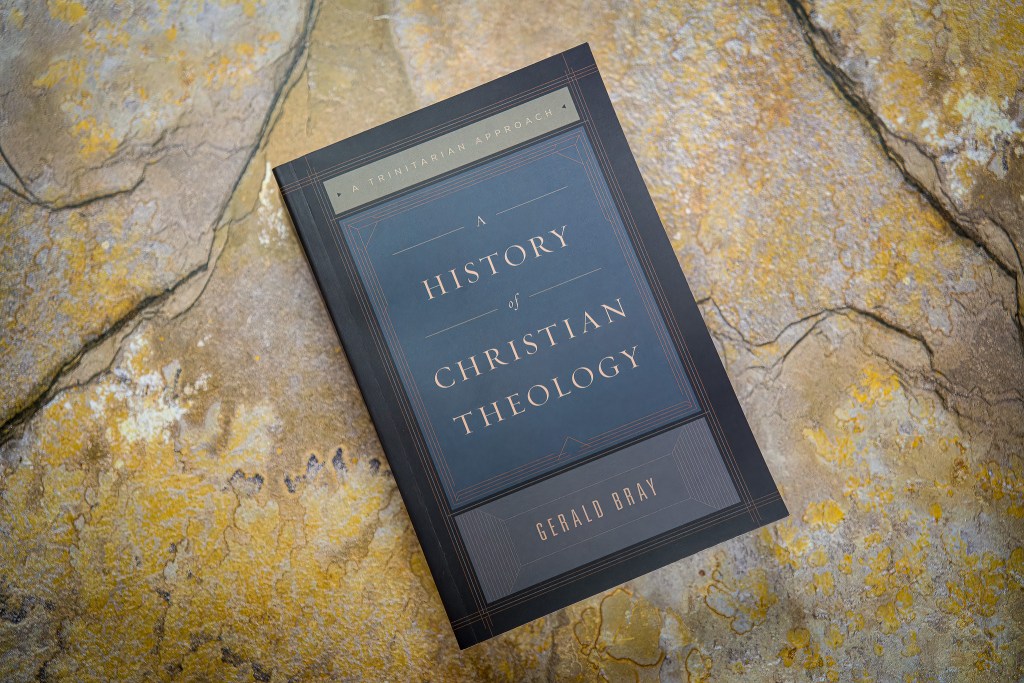
Professor Gerald Bray’s A History of Christian Theology: A Trinitarian Approach from Crossway is an insightful look at how Christian theology has evolved, with a focus on the Trinity. It provides the reader not just with the theology, but “the story behind the specific doctrines that have been debated, defined, and refined throughout church history” as the work self-defines. This scholarly volume consists of 1,225 pages (not counting the lists of persons and events as well as the general and Scriptural indexes at the end), 25 chapters which are divided into 8 parts: The Israelite Legacy, The Person of the Father, The Work of the Father, The Person of the Son, The Work of the Son, The Person of the Holy Spirit, The Work of the Holy Spirit, and One God in Three Persons.
From the early days of the church right up to today’s theological chats, Bray breaks down complex ideas while keeping the spotlight on the importance of the Triune God. His straightforward writing style makes these intricate debates easy to understand for everyone, whether you’re a pastor, a seminary student, a scholar, or just someone curious about deep Christian thought. This accessibility is crucial, as it invites a broader audience to engage with theological discussions that can often seem daunting or overly complex.
The book does a great job of diving into history, showing us important theological figures like Athanasius, Augustine, Aquinas, Luther, Calvin, and Barth. Each of these figures, with a host of others, played a pivotal role in shaping Christian doctrine and the way we understand God. Bray, who is a research professor at Beeson Divinity School, meticulously breaks down key events, like the Councils of Nicaea and Chalcedon, which were instrumental in defining the nature of Christ and the doctrine of the Trinity.
Moreover, he explores the struggles of medieval scholasticism, highlighting how it laid the groundwork for modern theology. The big shifts during the Reformation are also thoroughly examined; these transformations not only altered the course of Christian thought but also impacted society as a whole. Each chapter puts these theological developments in their historical and cultural contexts, making it easier for readers to see why these moments still matter today and how they continue to influence contemporary Christian beliefs.
Bray explores modern theology alongside historical analysis in an engaging way. He tackles important questions about faith, morality, and existence while staying true to classic Christian beliefs. This blend of historical context and current relevance helps readers understand how theology evolves while remaining traditional. Through thoughtful commentary and researched content, Bray inspires readers to consider their own beliefs and the impact of theological doctrines in their daily lives.
Overall, A History of Christian Theology: A Trinitarian Approach is a great resource for anyone interested in the development of Christian thought. Gerald Bray combines deep scholarship with clear communication, making this book a valuable addition to theological literature. Crossway has once again created a work that is both intellectually engaging and spiritually uplifting, inviting readers to explore the history of theology with renewed passion and a focus on the Triune God.
(I received a copy of this book from Crossway in exchange for an honest review)
 Tom's Theology Blog
Leave a comment