
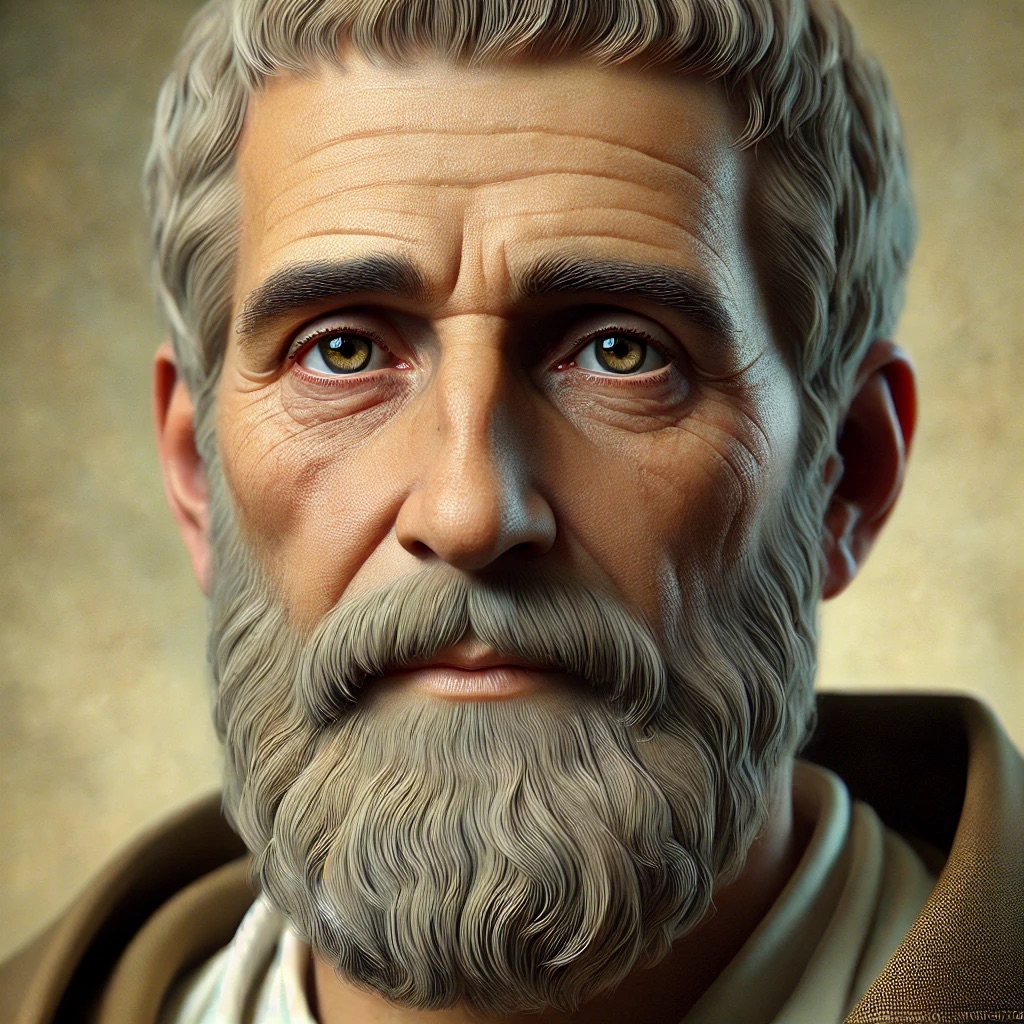
Thinkers and Theologians
Eusebius of Caesarea (c. 260–339 AD), often called the “Father of Church History,” was a bishop, theologian, and historian whose works have profoundly shaped our understanding of early Christianity. Born in Caesarea Maritima, in Roman Palestine, Eusebius lived through a period of intense persecution and dramatic transformation, witnessing the transition from the Roman Empire’s hostility toward Christianity to its eventual embrace under Emperor Constantine.
As bishop of Caesarea, Eusebius played a pivotal role in theological debates and ecclesiastical politics of his time. He is best known for his monumental work, Ecclesiastical History, which chronicles the first three centuries of the Church and provides invaluable insight into its development, challenges, and triumphs.
Eusebius’s View
Eusebius’s theology and historical perspective were deeply influenced by his context as a witness to the Constantinian shift and as a defender of Christian orthodoxy. Key aspects of his thought include:
1. The Role of Divine Providence:
Eusebius viewed history as a demonstration of God’s providence, with the Church’s triumph over persecution serving as evidence of God’s guiding hand. He framed the rise of Constantine as a pivotal moment in salvation history, interpreting it as a fulfillment of divine purposes.
2. Defense of Orthodoxy:
Eusebius participated in the theological debates of his era, particularly the Arian controversy. Though his initial views on the relationship between the Father and the Son were nuanced, he ultimately aligned with Nicene orthodoxy.
3. Biblical Scholarship:
A prolific writer, Eusebius produced works on the canon of Scripture, biblical geography, and the textual integrity of the Bible. His Chronicon and Onomasticon provide valuable resources for understanding biblical and historical contexts.
4. Historical Apologetics:
In Ecclesiastical History, Eusebius defended the Church against accusations of novelty by documenting its roots in apostolic tradition. He emphasized the continuity of Christian doctrine and practice, countering pagan and heretical critiques.
5. The Union of Church and State:
Eusebius celebrated Constantine’s conversion and the subsequent legalization of Christianity. He viewed the emperor as a divinely appointed ruler whose reign marked the culmination of God’s plan to unite the Church and the Roman Empire.
Contributions to Christianity
Eusebius’s contributions to Christian theology, history, and scholarship are immense:
1. Ecclesiastical History:
His Ecclesiastical History remains the most comprehensive account of early Christianity, preserving information about key figures, events, and writings that might otherwise have been lost.
2. Canonical Development:
Eusebius’s discussions on the canon of Scripture helped shape the Church’s understanding of which books were authoritative and inspired.
3. A Witness to Transition:
As a contemporary of Constantine, Eusebius documented the dramatic shift from persecution to imperial favor, providing unique insight into this pivotal era.
4. Biblical Scholarship:
His works on biblical geography and chronology enriched the Church’s understanding of Scripture and its historical context.
5. Theological Mediation:
Though his positions were sometimes controversial, Eusebius sought to bridge divides in theological debates, contributing to the eventual resolution of key doctrinal disputes.
Legacy
Eusebius of Caesarea’s life and work left an enduring legacy in both the Church and the academic world. His historical writings preserve the memory of the early Church’s struggles and victories, offering future generations a window into its faith, courage, and resilience.
While his close association with Constantine and his nuanced theological positions have drawn criticism, Eusebius’s devotion to documenting the Church’s story and defending its place in history remains an invaluable contribution. His life reminds Christians of the importance of remembering the past, celebrating God’s providence, and engaging with the world thoughtfully and faithfully. Through his works, Eusebius continues to inspire scholars, theologians, and believers to deepen their understanding of the faith’s rich and complex heritage.
 Tom's Theology Blog
Leave a comment