
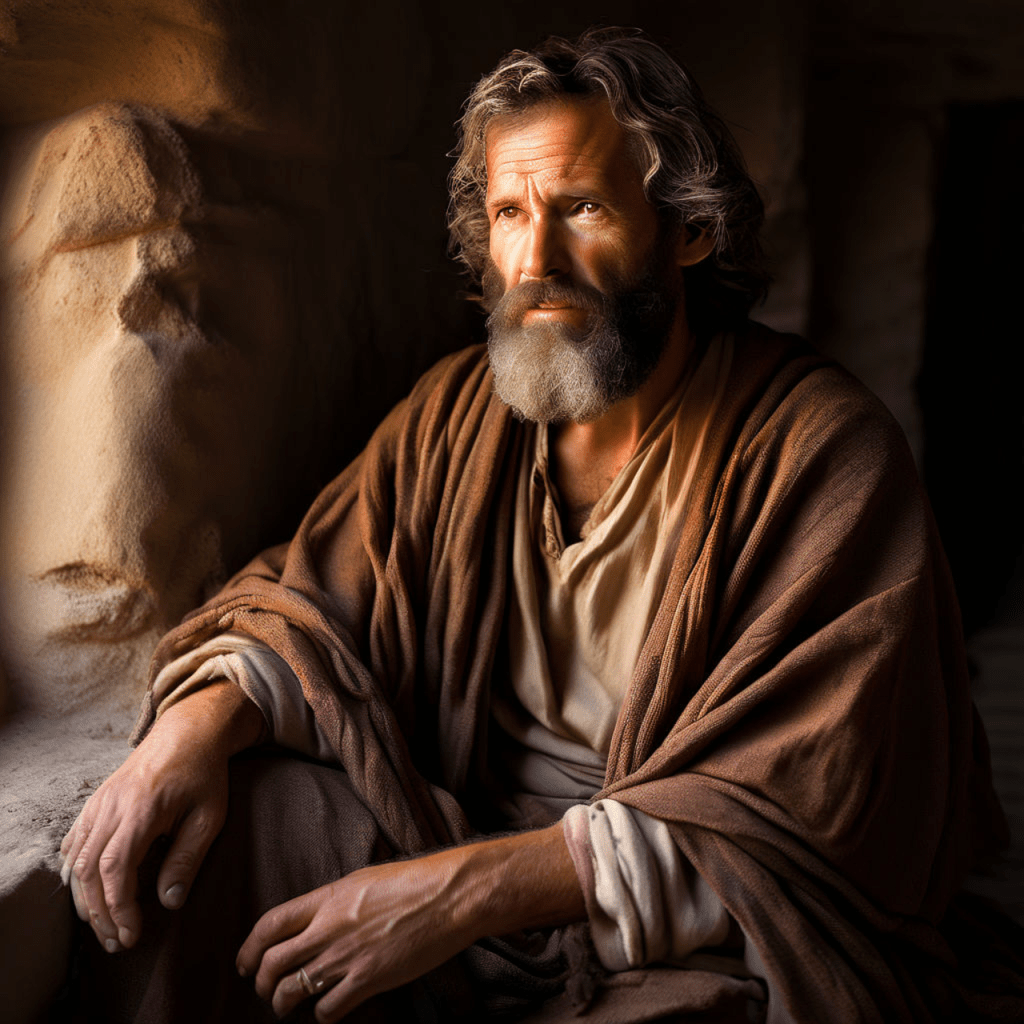
The Conversion of Skeptics: Paul and James
Introduction: A Powerful Proof of the Resurrection
A sudden conversion to a belief system is rare. But a radical shift from hostility to unwavering conviction, leading to suffering and martyrdom, is nearly unheard of—unless something extraordinary happened. Two of the most compelling cases of skeptics turned believers are Paul and James, the brother of Jesus.
- Paul (formerly Saul of Tarsus): A zealous persecutor of Christians who became one of Christianity’s greatest defenders after claiming to have seen the risen Christ.¹
- James, the brother of Jesus: A skeptic during Jesus’ ministry who later became the leader of the Jerusalem church and was martyred for his faith.²
These conversions demand explanation. Both men had no prior belief in Jesus’ resurrection, yet they became willing to suffer and die because they were convinced that Jesus had appeared to them alive.
1. Paul: From Persecutor to Proclaimer
Paul’s Background: A Devout Pharisee and Enemy of the Church
Before his conversion, Paul (Saul) was a highly educated Pharisee, trained under Gamaliel (Acts 22:3), and a Roman citizen. His zeal for Jewish law made him one of the most aggressive persecutors of early Christians:
- He approved of Stephen’s execution (Acts 7:58).
- He went from house to house arresting Christians (Acts 8:3).
- He obtained permission to hunt down believers in Damascus (Acts 9:1-2).
Paul had every reason to remain a Pharisee. He had power, prestige, and influence. If Christianity were false, he had no incentive to convert—unless something happened to force him to change his mind.
Paul’s Experience of the Risen Christ
Paul claims that while traveling to Damascus, he had a blinding encounter with the risen Jesus (Acts 9:3-9). This was not a gradual theological shift—it was an instantaneous transformation from enemy to evangelist.
- He immediately stopped persecuting Christians.
- He was baptized and publicly preached Jesus as the Messiah (Acts 9:18-20).
- He endured imprisonment, beatings, and eventual martyrdom rather than deny his experience (2 Cor. 11:24-27).
Paul’s Willingness to Suffer and Die
If Paul had fabricated his encounter with Jesus, why would he endure:
- Five beatings of 39 lashes (2 Cor. 11:24).
- Three beatings with rods (2 Cor. 11:25).
- Being stoned and left for dead (Acts 14:19).
- Years of imprisonment before being beheaded in Rome.³
Paul had nothing to gain—no wealth, no power, no earthly reward. His conversion is best explained by an actual encounter with the risen Jesus.
2. James: The Skeptical Brother of Jesus
James Before the Resurrection: A Doubter
Unlike Paul, James grew up with Jesus but did not believe in Him during His ministry. The Gospels state that Jesus’ brothers mocked Him and did not believe in Him (John 7:5).
- Mark 3:21 records that Jesus’ family thought He was insane.
- Jewish culture expected younger brothers to honor the eldest, yet James remained skeptical.
James had every cultural and personal reason to reject his brother’s Messianic claims. If anyone knew Jesus well enough to discredit Him, it would be His own brother.
What Changed? James Sees the Risen Christ
Despite his skepticism, James is later listed among the leaders of the church (Acts 15:13). Paul provides the key to this transformation in 1 Corinthians 15:7:
“Then He appeared to James, then to all the apostles.”
Something drastic must have happened to convince James—he went from mocker to martyr.
James’ Leadership and Martyrdom
James became:
- The leading figure of the Jerusalem church (Acts 15:13).
- The writer of the Epistle of James, filled with Messianic references to his own brother.
- A public preacher of Jesus’ resurrection—despite facing death.
Josephus records that James was stoned to death in AD 62 for refusing to renounce Jesus.⁴ Early Christian sources confirm that James was willing to die rather than deny his belief in the resurrection.⁵
If Jesus had not truly risen, why would James—who had previously rejected Him—willingly die for His cause?
3. Alternative Explanations Fail
Hallucination?
- Paul’s vision was not private—others witnessed it (Acts 9:7).
- Hallucinations don’t explain James’ transformation.
- Hallucinations don’t convince multiple people at different times.
Lying?
- Paul had no motive to fabricate his story.
- James had no incentive to claim his brother was alive unless he truly believed it.
Legend?
- Paul and James’ conversions were too early for legend development.
- The willingness to suffer and die is not characteristic of a legend-based movement.
4. Probability Assessment: The Conversion of Paul and James
- Probability of Paul and James converting if the resurrection is true: Very high (98%)
- Probability of Paul and James converting if the resurrection is false: Extremely low (1%)
Odds Ratio (Bayes Factor): 98% / 1% = 98 (Extremely strong evidence)
Conclusion: The Conversions of Paul and James Confirm the Resurrection
- Paul, an enemy of Christianity, suddenly became its greatest missionary.
- James, a skeptic, became the leader of the Jerusalem church and died for his faith.
- Their conversions are historically certain and best explained by their genuine belief in the resurrection.
Their radical transformations serve as compelling evidence that they truly saw the risen Jesus—not just an idea, but a living person who changed their lives forever.
Footnotes:
¹ N.T. Wright, The Resurrection of the Son of God (Minneapolis: Fortress Press, 2003).
² Craig S. Keener, Christobiography: Memory, History, and the Reliability of the Gospels (Grand Rapids: Eerdmans, 2019).
³ Tertullian, Scorpiace, trans. S. Thelwall (London: T&T Clark, 1870).
⁴ Josephus, Antiquities of the Jews 20.9.1.
⁵ Hegesippus, Memoirs, quoted in Eusebius, Ecclesiastical History 2.23.
 Tom's Theology Blog
Leave a comment