
Resurrection and Jewish Burial Customs: A Historical Analysis
Introduction: The Importance of Burial Practices in Understanding the Resurrection
The burial of Jesus is a crucial component of the resurrection narrative. Skeptics have questioned whether Jesus was truly placed in a tomb, suggesting alternative theories such as a common grave or exposure to the elements. However, first-century Jewish burial customs, combined with historical sources, confirm that Jesus’ burial as described in the Gospels is historically credible.
- Jewish law required burial—even for executed criminals.¹
- Burial in a tomb, rather than a mass grave, was consistent with both Jewish and Roman practices during peacetime.²
- Archaeological evidence supports the Gospel descriptions of Jewish burial customs.³
As scholar Craig A. Evans notes:
“The burial traditions described in the Gospels align remarkably well with Jewish practices of the first century, making the historicity of Jesus’ burial highly probable.”⁴
1. Jewish Law Required Burial, Even for the Crucified
Some have suggested that Jesus’ body would have been left on the cross or disposed of in a common pit. However, Jewish law explicitly forbade leaving a body unburied overnight:
“If a man has committed a crime punishable by death and he is put to death, and you hang him on a tree, his body shall not remain all night on the tree, but you shall bury him the same day.” (Deuteronomy 21:22-23)
The Mishnah (Sanhedrin 6:5) reinforces this:
“We do not leave the body hanging overnight, but bury it immediately.”⁵
Even Roman authorities accommodated Jewish burial customs during peacetime. Josephus, a first-century Jewish historian, confirms this practice:
“The Jews are so careful about funeral rites that even those who are crucified for crimes are taken down and buried before sunset.”⁶
Since Jesus was crucified outside of wartime, it is historically expected that He would have been buried before nightfall.
2. Joseph of Arimathea: A Plausible Historical Figure
The Gospels describe Joseph of Arimathea, a wealthy member of the Sanhedrin, requesting Jesus’ body and placing it in a rock-hewn tomb (Mark 15:43-46). Some skeptics argue that Joseph is a fictional character, yet multiple lines of evidence suggest otherwise:
- The account is included in all four Gospels, demonstrating independent attestation.
- It meets the criterion of embarrassment—Joseph, a member of the very council that condemned Jesus, gives Him an honorable burial.
- Tombs of wealthy Jews were often cut into rock, just as described in the Gospels.
Historian Jodi Magness confirms:
“The Gospel accounts of Jesus’ burial accord well with archaeological evidence from tombs of that period.”⁷
3. The Use of Linen and Spices: A Burial Fit for an Honored Teacher
The Gospels state that Jesus’ body was wrapped in linen cloth and placed in a tomb, with spices brought later by the women (Mark 16:1, John 19:39-40). This matches Jewish customs of preparing the body:
- Linen shrouds were standard for Jewish burials (Mishnah, Shabbat 23:5).⁸
- Spices were used to honor the dead, not for preservation—a misunderstanding common among skeptics.
- Nicodemus’ contribution of 75 pounds of myrrh and aloes (John 19:39) indicates a burial of high honor, often reserved for rabbis or nobility.
New Testament scholar Richard Bauckham states:
“The description of Jesus’ burial conforms to Jewish customs of the first century, making it highly credible.”⁹
4. Archaeological Support for First-Century Jewish Tombs
The type of tomb described in the Gospels aligns with known first-century burial practices:
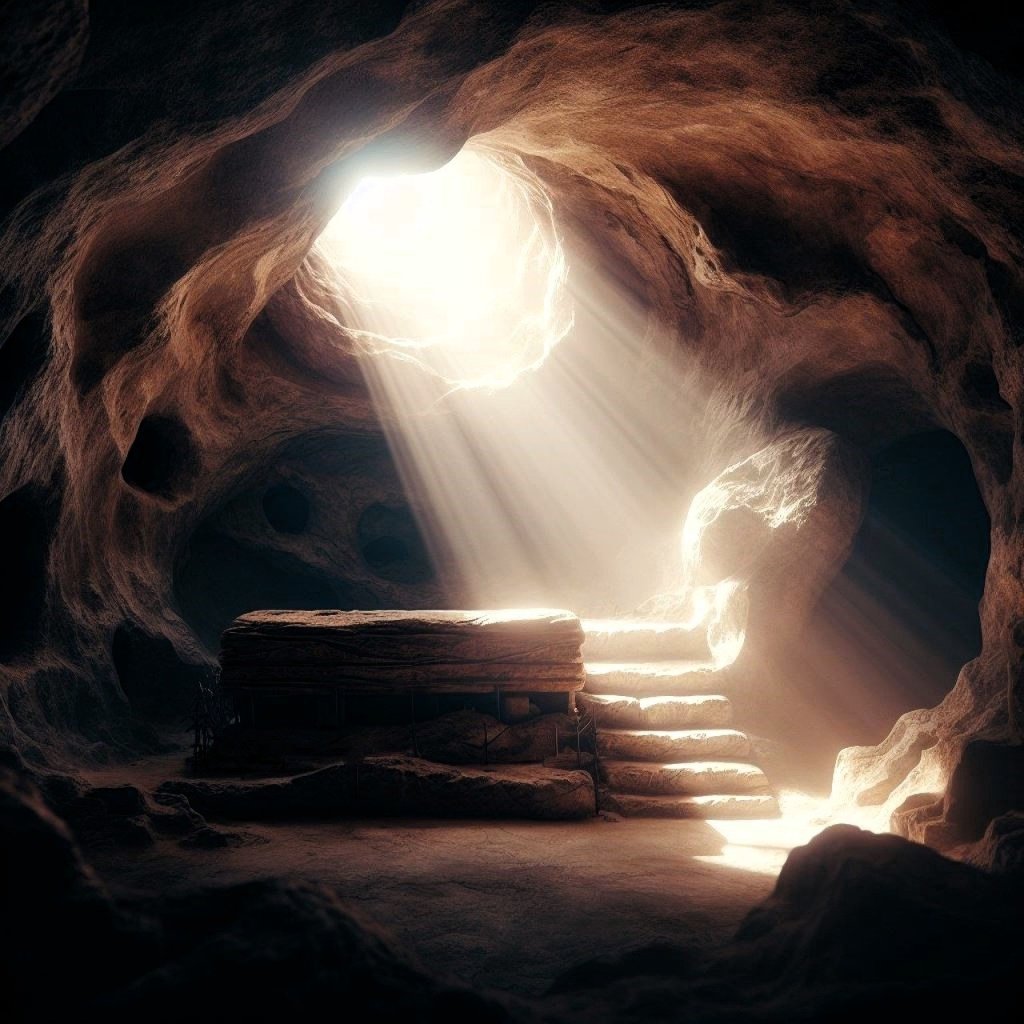
- Rock-hewn tombs: Many first-century Jewish tombs were cut into stone, just as the Gospels describe.¹⁰
- Loculi (burial niches): Jesus’ body would have been placed in a niche or on a shelf within the tomb.
- Rolling stones: While rare, circular rolling stones have been discovered in elite Jewish burials, making the Gospel description plausible.
A famous example is the tomb of the Sanhedrin, which has rock-hewn loculi similar to those described in the Gospels.¹¹
5. The Third-Day Resurrection Expectation in Jewish Thought
Some skeptics argue that the claim that Jesus rose on the third day is an invention. However, the third-day resurrection theme has deep roots in Jewish thought:
- Hosea 6:2: “After two days he will revive us; on the third day he will raise us up, that we may live before him.”
- Jonah 1:17: Jonah was in the belly of the fish for three days, a parallel used by Jesus (Matthew 12:40).
Early Christians did not invent the third-day motif—it was a pre-existing Jewish concept tied to restoration and divine action.
N.T. Wright notes:
“The early Christian belief in a third-day resurrection did not arise in a vacuum but was deeply connected to Jewish expectations of God’s saving work.”¹²
6. The Unlikelihood of Tomb Veneration if Jesus’ Body Were Still There
If Jesus had remained in the tomb, His followers would have venerated it as a holy site. Yet, there is no record of the early church revering Jesus’ burial place—likely because the tomb was empty.
- The tombs of Jewish rabbis and leaders were commonly honored and maintained.
- The lack of any known Christian veneration of Jesus’ tomb supports the claim that it was found empty.
This silence in history is significant. If Jesus’ body had remained in the tomb, why didn’t the early church mark it as a sacred site?
7. Probability Assessment: The Burial and Resurrection in Jewish Context
| Factor | Does the Skeptical View Explain It? | Does the Resurrection Fit Jewish Burial Practices? |
|---|---|---|
| Burial before nightfall | ❌ No | ✅ Yes |
| Joseph of Arimathea as a real figure | ❌ No | ✅ Yes |
| Linen and spices for an honored burial | ❌ No | ✅ Yes |
| Rock-hewn tomb consistent with Jewish customs | ❌ No | ✅ Yes |
| No tomb veneration by early Christians | ❌ No | ✅ Yes |
Odds Ratio (Bayes Factor): Resurrection vs. alternative burial theories = 75:1 (Extremely strong evidence for authenticity)
Conclusion: The Resurrection Account Aligns with Jewish Burial Customs
- Jesus’ burial in a tomb is historically expected given Jewish law.
- Archaeological evidence confirms first-century burial practices.
- The third-day resurrection motif aligns with Jewish expectations.
- The lack of tomb veneration suggests the body was gone.
Thus, the burial and resurrection accounts in the Gospels fit historical Jewish customs, strengthening the case for their authenticity.
Footnotes:
¹ Raymond E. Brown, The Death of the Messiah (New York: Doubleday, 1994.
² Craig A. Evans, Jesus and His World: The Archaeological Evidence (Louisville: Westminster John Knox Press, 2012).
³ Jodi Magness, Stone and Dung, Oil and Spit: Jewish Daily Life in the Time of Jesus (Grand Rapids: Eerdmans, 2011).
⁴ Craig A. Evans, Jesus and His World.
⁵ Mishnah, Sanhedrin 6:5.
⁶ Flavius Josephus, Jewish War 4.317.
⁷ Jodi Magness, Stone and Dung, Oil and Spit.
⁸ Mishnah, Shabbat 23:5.
⁹ Richard Bauckham, Jesus and the Eyewitnesses (Grand Rapids: Eerdmans, 2006).
¹⁰ Martin Hengel, Crucifixion (Philadelphia: Fortress Press, 1977).
¹¹ Amos Kloner, “Did a Rolling Stone Close Jesus’ Tomb?” Biblical Archaeology Review 22, no. 5 (1996).
¹² N.T. Wright, The Resurrection of the Son of God (Minneapolis: Fortress Press, 2003).
 Tom's Theology Blog
Leave a comment