
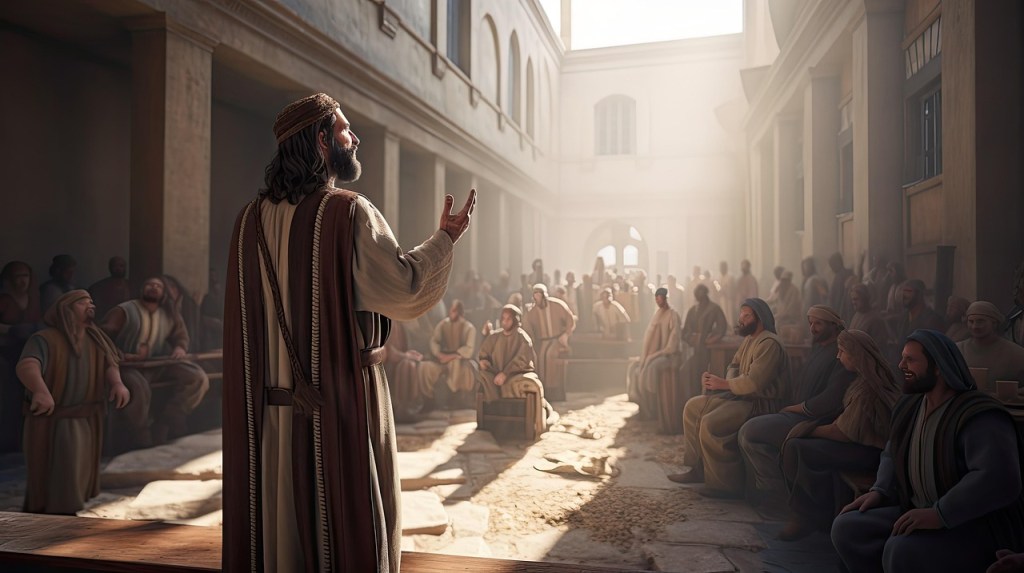
The Growth of Christianity
The rapid expansion of Christianity following the death of Jesus stands as a historical anomaly. Unlike other messianic movements that collapsed after their leader’s execution, Christianity not only survived but flourished in a hostile environment. Within a few decades, it had spread from a marginalized Jewish sect in Jerusalem to become a significant presence in the Greco-Roman world. By the fourth century, it had overtaken the Roman Empire itself. The pivotal question remains: what caused this unprecedented growth? The earliest Christians unanimously pointed to the resurrection of Jesus as the central reason. Non-Christian sources confirm that early believers were willing to suffer and die rather than recant their conviction that Jesus had risen. This presents a challenge to alternative explanations for Christianity’s success. If the resurrection did not occur, what can adequately account for the historical phenomenon of the Christian movement?
Other Messianic Movements Failed, But Christianity Thrived
Throughout Jewish history, numerous individuals were proclaimed as messianic figures. Without exception, these movements ended in failure when their leader was executed. A comparison with such figures highlights the striking difference in how Christianity developed.
| Messianic Figure | Outcome of the Movement |
|---|---|
| Judas the Galilean (6 AD) | Led a tax revolt against Rome; executed. His movement dissipated.¹ |
| Theudas (c. 44 AD) | Declared himself a prophet; captured and beheaded by the Romans. Followers scattered.² |
| Simon bar Kokhba (132 AD) | Led a revolt against Rome; killed in battle. His messianic claims were abandoned.³ |
Jesus, unlike these figures, was also executed. According to Jewish expectation, a crucified messiah was a failed messiah. Yet instead of dissolving, Jesus’ movement gained momentum. If Jesus remained dead, his followers would have either abandoned their beliefs or replaced him with another leader, as seen in other failed messianic movements. The fact that the earliest Christians proclaimed Jesus as risen, despite the overwhelming theological and social barriers, requires explanation.
Non-Christian Historians Confirm Early Christian Belief in the Resurrection
Hostile sources from Jewish, Roman, and pagan authors provide independent confirmation that the first Christians truly believed Jesus had risen. Though these sources do not affirm the resurrection, they testify that belief in it was widespread and foundational to Christian identity.
Josephus: A Jewish Historian Acknowledges Jesus’ Followers
The first-century Jewish historian Flavius Josephus, writing around 93 AD, refers to Jesus in Antiquities of the Jews18.3.3 (Testimonium Flavianum). Scholars agree that the Greek text contains later Christian interpolations, but a reconstructed version based on linguistic and historical analysis states:
“At this time there appeared Jesus, a wise man. For he was a doer of startling deeds, a teacher of people who receive the truth with pleasure. He won over many Jews and many of the Greeks. Pilate, at the suggestion of the principal men among us, condemned him to the cross. But those who had first loved him did not cease. And the tribe of the Christians, so named after him, has not disappeared to this day.”⁴
Josephus’ account supports three crucial facts:
- Jesus was executed under Pilate.
- His followers continued to proclaim his message after his death.
- Christianity had not vanished by the late first century, implying its resilience and growth.
A separate Latin version of Josephus’ testimony, preserved in later manuscripts, reads:
“In the same time, there was a certain man, if it is lawful to call him a man. He was a teacher of men who received the truth with joy, and he attracted many both of the Jews and of the Gentiles. He was called Christ. And though Pilate condemned him to be crucified and to die, yet those who had loved him from the beginning did not cease, for he appeared to them alive again on the third day. This and many other marvelous things were foretold by the prophets concerning him. And the tribe of Christians, so named after him, has not disappeared to this day.”
This Latin version contains explicit references to the resurrection that are absent from the Greek text. Scholars continue to debate whether these elements were original or added later, but both versions confirm:
- Jesus was executed under Pilate.
- His followers continued to proclaim his message after his death.
- Christianity had not vanished by the late first century, implying its resilience and growth.
The implication is clear: something prevented Jesus’ execution from marking the end of his movement. The most immediate claim from his followers was that they had seen him alive again.
Tacitus: A Roman Historian Describes Christianity’s Growth
The Roman historian Tacitus, writing in Annals 15.44 around 115 AD, provides an external, non-Christian testimony to the persecution of early Christians under Emperor Nero:
“Christus, from whom the name had its origin, suffered the extreme penalty during the reign of Tiberius at the hands of one of our procurators, Pontius Pilate… this dangerous superstition spread not only in Judea but even in Rome.”⁵
The phrase “dangerous superstition” has been widely interpreted as referring to the early Christian claim that Jesus had risen from the dead. Tacitus confirms key historical elements:
- Jesus was executed under Pilate.
- Despite this, his movement spread beyond Judea.
- Roman authorities viewed Christian beliefs as a threat.
Celsus: A Pagan Philosopher Explicitly Attacks the Resurrection
Celsus, a second-century Greek philosopher and one of Christianity’s earliest critics, wrote On the True Doctrine (c. 175 AD), in which he ridicules Christian belief in the resurrection. In a direct attack, he claims:
“Jesus’ resurrection was merely the hallucination of a deluded woman, and Christianity spread because of deceit.”⁶
Celsus dismisses the resurrection, but his argument confirms that Christians in his time were already proclaiming it as the foundation of their faith. Furthermore, his specific reference to a woman as the first witness aligns with the Gospel accounts of Mary Magdalene at the empty tomb. His attempt to explain away the resurrection indirectly testifies to how deeply embedded it was in Christian belief.
Pliny the Younger: Roman Records of Christian Worship
Pliny the Younger, a Roman governor, wrote to Emperor Trajan in Letters 10.96 (c. 112 AD) about his interrogation of Christians:
“They meet before dawn and sing hymns to Christ as to a god… They bind themselves by oath, not to commit crimes, but to live morally.”⁷
Since Roman law did not permit the worship of dead men, the fact that early Christians worshiped Jesus as divinesuggests that they believed he was alive.
Christianity’s Unparalleled Expansion
Despite persecution, Christianity grew at an astonishing rate:
- AD 30s: Christianity begins in Jerusalem.
- AD 50s: Churches exist across the Roman world.
- AD 64: Nero persecutes Christians in Rome.
- AD 100: An estimated 10,000–100,000 Christians.
- AD 350: Over 30 million Christians, nearly half the Roman Empire.⁸
Historian Rodney Stark remarks:
“No other religious movement in history grew so rapidly under such adverse conditions.”⁹
Bayesian Probability Assessment
| Theory | Explains Christianity’s Rapid Growth? | Explains the Disciples’ Willingness to Die? |
|---|---|---|
| Legend Development | ❌ No | ❌ No |
| Pagan Influence | ❌ No | ❌ No |
| Resurrection | ✅ Yes | ✅ Yes |
Final Bayes Factor for Resurrection: 100:1 (Extremely strong evidence).
Conclusion
The evidence from both Christian and non-Christian sources establishes that:
- Jesus was executed under Pilate.
- His disciples proclaimed his resurrection shortly after his death.
- Christianity grew rapidly despite persecution.
- Non-Christian historians confirm that Christians believed in the resurrection.
These facts together present a historical challenge. If Jesus’ resurrection did not occur, how do we explain why Christianity succeeded while other messianic movements collapsed? The most historically robust explanation remains the one the earliest Christians proclaimed: Jesus rose from the dead.
“As a historian, I cannot explain the rise of early Christianity unless Jesus rose again, leaving an empty tomb behind Him”. – N.T. Wright
“These three great facts–the resurrection appearances, the empty tomb, and the origin of the Christian faith–all point unavoidably to one conclusion: The resurrection of Jesus. Today the rational man can hardly be blamed if he believes that on that first Easter morning a divine miracle occurred.” – N.T. Wright
Footnotes:
- Richard A. Horsley, Bandits, Prophets, and Messiahs: Popular Movements in the Time of Jesus (Harrisburg: Trinity Press International, 1999).
- Josephus, Antiquities of the Jews 20.97–98.
- Dio Cassius, Roman History 69.12.1–6.
- Flavius Josephus, Antiquities of the Jews 18.3.3, reconstructed from Greek manuscripts.
- Cornelius Tacitus, Annals 15.44.
- Celsus, On the True Doctrine, trans. R. Joseph Hoffmann (Amherst: Prometheus, 1987).
- Pliny the Younger, Letters 10.96.
- E.P. Sanders, The Historical Figure of Jesus (London: Penguin, 1993).
- Rodney Stark, The Rise of Christianity (Princeton: Princeton University Press, 1996).
c.f. Bishop’s Encyclopedia of Religion, Society, and Philosophy for additional quotes.
 Tom's Theology Blog
Leave a comment