
Thinkers and Theologians
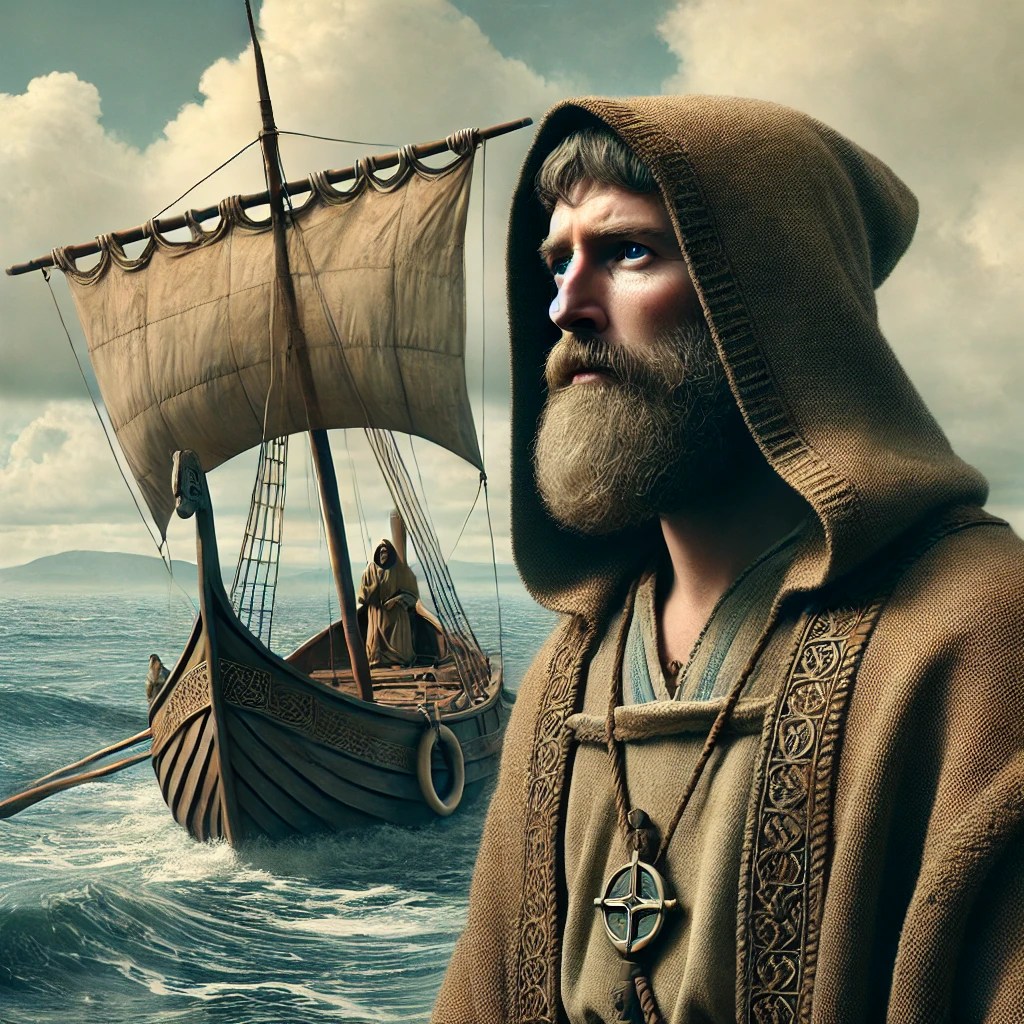
Brendan the Navigator (c. 484-577 AD), also known as Saint Brendan of Clonfert, was an Irish monk, abbot, and missionary renowned for his legendary sea voyage in search of the “Promised Land of the Saints.” Born in Tralee, Ireland, he lived during the golden age of Irish monasticism, a period when Ireland became a center for learning and evangelization. Educated under Saint Finnian of Clonard, Brendan developed a strong foundation in Scripture, asceticism, and missionary zeal. His travels and monastic foundations made him one of the most celebrated figures in early medieval Christianity, and his influence extended far beyond Ireland.
His most famous legacy is the Navigatio Sancti Brendani Abbatis (The Voyage of Saint Brendan the Abbot), an extraordinary tale of faith and adventure written between the 8th and 10th centuries. While parts of the story contain fantastical elements, such as encounters with sea monsters and islands that turn out to be enormous fish, it reflects the deep spiritual ethos of Irish monasticism—one of trust in divine providence and the pursuit of a land free from sin. The story also influenced medieval cartography, inspiring explorers to search for Brendan’s mythical land in the Atlantic.
Brendan’s real historical contributions, however, were equally remarkable. He traveled extensively across Ireland, Scotland, Wales, and possibly Brittany, spreading monastic principles and founding churches and monasteries, the most famous being Clonfert Abbey, which became a major center of learning and missionary outreach.
Views
Brendan’s worldview was deeply shaped by the Celtic Christian tradition, which emphasized pilgrimage as a path to spiritual perfection. To him, venturing into the unknown was not just about physical discovery but about deepening one’s reliance on God. His legendary voyage represents the Christian journey of faith—navigating through trials, seeking the heavenly homeland, and trusting in divine guidance.
The Navigatio also reflects Irish theological themes of harmony between humanity and creation. Throughout the story, Brendan and his companions interact with extraordinary creatures and marvel at the wonders of God’s creation, emphasizing a sacramental view of the world—where nature is a revelation of divine mystery.
Brendan’s belief in monastic discipline and communal life was evident in his work founding monastic settlements. His leadership emphasized a life of prayer, fasting, and self-denial, but also of fraternity and hospitality. Like other Irish monks of his time, Brendan saw mission work as an extension of the monastic calling, leading him and others to undertake perilous journeys to spread Christianity.
Contributions to Christianity
Brendan’s contributions to Christianity were both tangible and inspirational. His founding of monasteries helped shape Irish and European Christian practice. Among these, Clonfert Abbey became one of the most important monastic centers of its time, drawing students and monks from across Ireland and beyond.
His influence on Christian exploration and missionary work was profound. The Navigatio encouraged later Irish monks to see themselves as “peregrini,” wandering missionaries who spread the Gospel across Europe. Figures like Columba of Iona (521–597 AD) and Columbanus (543–615 AD) followed in his footsteps, bringing the Christian faith to Scotland, Gaul, and Italy.
Brendan’s story also became a source of encouragement for Christian seafarers and explorers. It was widely believed in medieval times that Brendan had reached far-off lands, possibly even North America, centuries before Norse explorations. His tale inspired figures such as Christopher Columbus, who was said to have been aware of the Navigatio and took comfort in the idea that others had voyaged across the Atlantic before him.
Legacy
Brendan’s legacy endures in multiple ways. Historically, he is recognized as one of the Twelve Apostles of Ireland, a group of early Irish saints who played a crucial role in Christianizing Ireland and shaping its monastic culture. His influence can still be seen in Irish monastic traditions, many of which laid the foundation for Christian scholarship and evangelization in Europe during the Middle Ages.
His legendary voyage remains one of the most enduring tales in Christian literature, capturing the imagination of writers, theologians, and even explorers for centuries. Some historians and adventurers have even speculated that Irish monks, inspired by Brendan, may have reached the Americas before the Vikings. In 1976, British explorer Tim Severin attempted to recreate Brendan’s voyage by building a replica of his supposed leather-clad boat, successfully sailing from Ireland to Newfoundland, lending some credence to the idea that such a journey was possible.
Brendan’s patronage extends to sailors, travelers, and those embarking on spiritual journeys. His feast day, May 16, is celebrated in Ireland and throughout the Christian world, particularly among those who seek his intercession for guidance and protection.
Ultimately, Brendan the Navigator represents the adventurous spirit of faith, where trust in God leads believers to new horizons—both in this life and in the journey toward eternity.
 Tom's Theology Blog
Leave a comment