
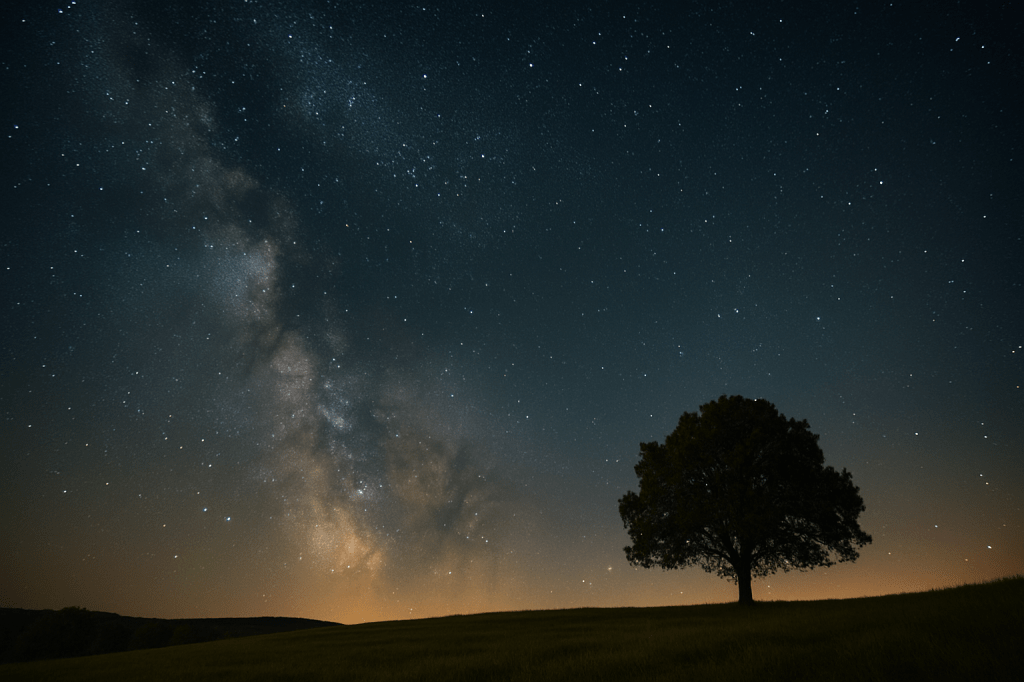
A Published Philosophical and Scientific Argument for a Personal Creator
Abstract
This paper presents a contemporary refinement of the Kalam Cosmological Argument, integrating developments in analytic philosophy and modern cosmology to argue for the existence of a transcendent personal Creator. Rather than beginning with theological premises, the argument proceeds from the nature of physical reality itself. Drawing on multiple, independent lines of scientific evidence—including cosmic expansion, the cosmic microwave background, thermodynamics, and the Borde–Guth–Vilenkin theorem—it demonstrates that the universe possesses a finite past and therefore cannot be self-explanatory. The paper then eliminates all non-personal explanatory options, showing that physical precursors, impersonal laws, quantum vacua, and brute facts cannot coherently account for the origin of spacetime, the finely tuned structure of the cosmos, or the selection of one universe among countless possibilities. The only category of cause with the requisite causal powers is a timeless, spaceless, immaterial, rational Mind capable of intentional agency. The conclusion reached is not a mere inference to mystery but a logically compelled explanation grounded in the convergence of metaphysics and science. The final analysis shows that the cause identified through philosophical reasoning coheres precisely with the classical theistic conception of God.
בְּרֵאשִׁית בָּרָא אֱלֹהִים אֵת הַשָּׁמַיִם וְאֵת הָאָרֶץ
In-beginning created God the-heavens and-the-earth
The Hebrew phrase “the heavens and the earth” functions as a merism, referring to the totality of physical reality. The Common English Bible reflects this sense when it translates the verse as, “In the beginning, God created the universe.” This ancient proclamation has shaped the Judeo-Christian understanding of origins, asserting that the universe is not eternal but created.
The modern formulation known as the Kalam Cosmological Argument operates within this same framework, though independently of theological premises. The argument begins with the question of whether the universe has a finite past, and if so, what kind of cause could bring such a universe into existence. While the classical Kalam maintains profound value, the argument benefits from further development in light of contemporary philosophy and modern cosmology. When articulated with precision, it provides one of the clearest and strongest lines of reasoning pointing to the existence of a personal Creator.
The purpose of this paper is to present a refined form of the Kalam—one that is scientifically informed, philosophically rigorous, and suited for a twenty-first century audience. The argument does not begin with Scripture or doctrinal assumptions. Instead, it begins with the nature of physical reality itself and moves outward to the kind of cause that can explain that reality. Only after this philosophical and scientific groundwork is established will the paper turn to the theological implications.
The argument proceeds through four premises. These premises do not assume the existence of God. Rather, they begin with the structure of the physical universe, the implications of a finite past, and the explanatory demands such a universe creates. From these considerations, the nature of the cause is analyzed. The conclusion—that the best explanation is a timeless, spaceless, immaterial, rational Mind—is not smuggled in but emerges from the logic.
The paper will unfold in stages. First, it will address why a finite universe cannot be self-explanatory. Second, it will explore the scientific evidence supporting a finite past. Third, it will examine the nature of the cause capable of producing the universe. Fourth, it will answer major objections, particularly those raised in contemporary atheistic discourse. Finally, it will argue that the cause identified through philosophical reasoning coheres with the God of the Bible.
The tone of this work is scholarly but accessible. It assumes no theological background but does require intellectual honesty. Whether the reader is a believer, skeptic, or undecided, the goal is the same: to present the argument with clarity and depth, allowing the weight of the reasoning—and the evidence—to speak for itself.
The Universe as a Contingent and Finite Reality
If the universe has a finite past, then it cannot be self-explanatory. This follows from a simple principle: no part of a finite system can explain the existence of the entire system. A library is not explained by a single book within it. A forest is not explained by one of its trees. Likewise, if the physical universe is finite, then no physical entity within it can serve as its cause.
This point is often misunderstood, especially in online discussions. The argument is not that “everything needs a cause.” It is that everything with a finite past requires a cause beyond itself. The crucial concept here is the totality of physical reality—the entire set of all physical entities, processes, fields, and laws. If this totality is finite, then its cause must lie beyond it. A cause cannot be part of the effect it causes.
This is not a theological proposition; it is a metaphysical one. Philosophers as early as Aristotle recognized that contingencies require explanations, and modern analytic metaphysics echoes the same principle. A finite physical universe is a contingent reality. As such, it must either be explained by something beyond the physical or else remain a brute fact.
The “brute fact” approach will be addressed later. For now, the key point is that a finite universe demands an external cause. The next question is whether the universe does, in fact, have a finite past. On this question, modern cosmology provides remarkable clarity.
Evidence for a Finite Past
The finitude of the universe is not inferred merely from theological tradition or philosophical intuition. It arises directly from observational cosmology and the structure of physical laws. The data supporting a finite past come from multiple, independent lines of evidence, each pointing toward a beginning.
1. Cosmic Expansion
In 1929, Edwin Hubble published observations showing that distant galaxies are moving away from us. More importantly, they are moving away from each other. This implies that the universe is expanding. Running the expansion backward leads to a state in which all matter, energy, and spacetime converge to a very early condition of maximum density. This is not necessarily a singularity in the mathematical sense, but it is a boundary to physical time.
This alone suggests that the universe has not existed forever. Expansion implies a beginning.
2. The Cosmic Microwave Background
In 1965, Arno Penzias and Robert Wilson discovered the cosmic microwave background radiation. This faint but uniform glow permeating the sky is residual heat from the early universe. Its existence confirms that the universe was once in a hot, dense, tightly compressed state. The CMB is not theoretical; it is observational evidence of cosmic infancy. It implies a finite beginning.
3. Thermodynamics
The second law of thermodynamics states that the entropy of a closed system tends to increase. A universe that had existed forever would have exhausted its usable energy long ago. Heat would be uniform, stars would be burned out, and no large-scale structure would remain. Yet the universe retains enormous free energy. Arthur Eddington famously declared the second law to occupy “the supreme position among the laws of nature.”¹ Its implications are clear: the universe is not past-eternal. It began in a low-entropy state and has been winding upward ever since.
4. The Borde–Guth–Vilenkin Theorem
One of the most important contributions to modern cosmology is the Borde–Guth–Vilenkin (BGV) theorem. Arvin Borde, Alan Guth, and Alexander Vilenkin demonstrated that any universe which has, on average, been expanding throughout its history cannot be extended infinitely into the past. This applies to standard cosmology, inflationary cosmology, eternal inflation, and most multiverse models.
As Vilenkin summarized: “All the evidence we have says that the universe had a beginning.”²
This conclusion holds even if one denies the Big Bang singularity. A beginning is still required.
5. Quantum Cosmology
Attempts to avoid a beginning through quantum gravity—such as the Hartle–Hawking no-boundary proposal—do not actually eliminate a beginning. They reinterpret it mathematically. Stephen Hawking himself acknowledged this when he asked, “What breathes fire into the equations?”³ A mathematical boundary is not a cause.
All known models—classical or quantum—point to a finite past.
The Nature of the Cause Beyond the Universe
Once it is established that the universe has a finite past, the next step is to consider what kind of cause could bring a finite physical reality into existence. This is not a matter of theological preference but philosophical necessity. Whatever explains the universe must lie beyond the universe. This means the cause cannot be:
- physical,
- material,
- temporal,
- spatial,
- governed by natural law,
- or contingent upon physical conditions.
These exclusions follow directly from the conclusion that the physical universe—space, time, matter, energy, and physical law—had a beginning. The cause of the whole cannot be a part of the whole. This principle, simple yet profound, shapes the remainder of the argument.
One of the most common missteps in popular discussions is the assumption that the cause of the universe must itself be a physical entity. Many skeptics imagine a preceding physical state, a prior universe, a quantum field, or a timeless physical mechanism somehow generating spacetime. But all these proposals run into the same logical wall. If the totality of physical reality has a finite past, then any proposed physical precursor is itself part of that totality. It cannot explain the whole.
This leaves only two broad categories of possible causes: abstract objects or minds. Abstract objects—numbers, sets, mathematical laws—have no causal powers. They do not produce effects. As Peter van Inwagen observes, abstracta do not stand in causal relations.⁴ They cannot initiate change, select states, or create physical reality. They are descriptive, not creative.
If the cause is neither physical nor abstract, the only remaining candidate is a mind. But this conclusion must be earned through careful reasoning, not asserted prematurely. The sections that follow will explore why the cause of the universe must possess the properties associated with consciousness, agency, and intention.
Why the Cause Cannot Be an Impersonal Physical Law
A common assertion in modern atheistic discourse is that “the laws of physics caused the universe.” This idea is often presented as though it were both scientific and philosophically satisfying. In reality, it suffers from several serious defects.
Physical laws describe how physical systems behave once those systems exist. They do not bring systems into being. A law cannot act independent of the reality it governs. It has no agency, no will, and no mechanism by which it can generate matter or energy. John Polkinghorne expresses this clearly: “Laws of nature do not of themselves bring anything into being.”⁵
To say that laws created the universe is to confuse explanation with causation. It is akin to saying that the rules of chess create the chessboard or that the principles of geometry create a triangle. Laws provide structure but not existence. At most, they explain how things behave, not why they are.
Moreover, physical laws are themselves contingent. They could have been otherwise. Different universes are conceivable with different physical constants or different symmetry groups. A law cannot explain the origin of the laws themselves. Appealing to natural law as the origin of nature is circular.
Thus, the idea of an impersonal physical law creating the universe is not a genuine explanation. It simply shifts the problem back one level while offering no mechanism or reason. A deeper cause is required—one that is not itself part of the physical framework.
Why Quantum “Nothing” Cannot Be the Ultimate Explanation
Some skeptics appeal to quantum cosmology to argue that the universe emerged from “nothing.” This claim has gained traction through popular works that misrepresent the nature of quantum vacua. Quantum “nothing” is not nothing in any meaningful philosophical sense. It is a seething ocean of fluctuating energy fields, governed by mathematical laws, embedded in a larger mathematical structure known as Hilbert space.
As philosopher David Albert wrote in his review of Lawrence Krauss, the “nothing” often described in quantum cosmology is “a highly structured quantum state,” not the absence of physical reality.⁶
Quantum physics does not deal with metaphysical nothingness but with physical processes governed by equations. If a vacuum fluctuation produces a particle, the fluctuation itself exists. The laws governing it exist. The space in which it fluctuates exists. The mathematics describing it exists. None of these constitute “nothing.”
A genuine nothing offers no potentiality, no causal capacity, no laws, and no properties. It cannot produce a universe any more than the absence of a musician can produce a symphony. Something does not come from nothing without cause. To suggest otherwise is to abandon reason.
Thus, quantum cosmology—fascinating though it is—cannot be the ultimate explanation of the universe’s origin. It presupposes the very things it must explain.
The Inadequacy of Brute Facts
A final alternative is to claim that the universe is a brute fact—unexplained, uncaused, and without reason. This view is sometimes presented as intellectually minimalist, but in reality it is the most extravagant position of all. To embrace brute facts is to give up on explanation. It violates the principle upon which all scientific inquiry rests: that patterns, structures, and events have causes.
A brute-fact universe leaves all the following without explanation:
- the existence of spacetime,
- the laws of physics,
- the uniformity of nature,
- the fine-tuning of constants,
- the low-entropy initial state,
- the mathematical structure of reality,
- and the existence of consciousness.
If the universe is brute, then so are these features. The result is a universe filled with unconnected mysteries. J. L. Mackie recognized that brute facts are philosophically possible but intellectually hollow.⁷ They amount to refusing to seek understanding.
By contrast, theism offers a unified explanatory framework. It does not multiply mysteries but resolves them under a single necessary cause. It is simpler, more powerful, and more coherent than positing countless unexplained features.
Brute facts do not challenge theism; they surrender to ignorance. A serious philosophical analysis seeks deeper causes, not fewer.
Why the Cause Must Be a Mind
Once all non-mental explanations have been eliminated, the analysis naturally turns toward the only remaining category of causes capable of producing a finite universe: a mind. This conclusion may seem intuitive to the lay reader, but it requires philosophical justification. The argument is not that “we don’t know, therefore God did it.” Instead, it proceeds by careful exclusion. When abstract objects, physical causes, quantum vacua, and brute facts all fail as adequate explanations, the alternative is not arbitrary. It is the only category of reality known to exhibit the necessary causal powers.
A mind is capable of producing effects without prior physical conditions. Minds can initiate new states of affairs. They can choose, intend, select, and bring about outcomes not determined by physical necessity. The emergence of a universe with specific laws, constants, and initial conditions is not the kind of occurrence that can be explained by impersonal mechanisms. Such mechanisms either operate deterministically, in which case they cannot produce a new universe without already existing, or they operate probabilistically, in which case they presuppose a framework of laws and mathematical structures.
By contrast, a mind can deliberate among possibilities and actualize one. It can bring about change without being forced to do so by prior conditions. This ability is crucial. The origin of the universe represents a transition from no physical reality to physical reality. Such a transition cannot occur from an impersonal cause without contradiction. If the cause were impersonal and timeless, the effect would be timeless as well. The effect would be eternally present. But the universe is not eternal; it has a finite beginning. Therefore the cause must be capable of initiating a temporal effect without being subject to temporal conditions. This is a characteristic of personal agency.
A timeless personal agent can will a universe into being. Philosophers sometimes illustrate this by analogy: a person can make a decision without undergoing physical change. The choice needs no mechanical buildup; it is the act of a mind. If the cause of the universe possessed no mental properties, the effect would be produced automatically and eternally. That would contradict the finitude of the universe. Thus, the origin of the universe implies a timeless decision—a choice—made by a cause outside time.
This is why so many philosophers, regardless of theological commitments, recognize that personal agency provides the most coherent explanation. Richard Swinburne argues that theism offers the simplest and most unified account for the universe’s origin precisely because a personal explanation has the explanatory powers impersonal causes lack.¹⁰ Personal causation can account for contingency, intentionality, and the selection of specific outcomes. These qualities match the data of the cosmos more closely than any impersonal mechanism.
The emergence of the universe is not simply the existence of matter and energy but the existence of a highly ordered structure. The laws of physics are deeply rational. They exhibit mathematical harmony and remarkable simplicity. This fact itself points toward intelligence. Albert Einstein famously remarked that the most incomprehensible thing about the universe is that it is comprehensible.⁹ The intelligibility of the universe is a clue to its source. The best explanation for why the universe is structured in rational, mathematical ways is that it was produced by a rational mind.
Fine-Tuning and the Imprint of Intelligence
One of the most striking features of the universe is the fine-tuning of its fundamental constants. These constants determine the strength of gravity, the behavior of electromagnetism, the stability of atoms, the formation of stars, and the chemistry that allows life to exist. The values of these constants lie within astonishingly narrow ranges. Even slight deviations in many of them would result in a universe incapable of sustaining life—or incapable of forming any structure at all.
Physicist Paul Davies has observed that the impression of design is overwhelming.⁸ It is not merely that the universe is conducive to life but that the conditions required for life are deeply improbable under chance. Fine-tuning demands explanation. Appeals to the multiverse, while interesting, do not solve the issue, since the multiverse itself would require fine-tuning of its own generating mechanism, and the BGV theorem still applies to many multiverse models.²
Fine-tuning strongly suggests intention. It reflects the work of a mind setting the conditions necessary for a particular kind of universe. When human beings engage in fine-tuning—designing instruments, calibrating machines, adjusting variables—they exhibit intentionality. Fine-tuning is a signature of intelligence.
The nature of the fine-tuning also reflects rationality. The universe is not merely functional; it is elegant. Its laws exhibit mathematical beauty, simplicity, and internal harmony. This is why physicists often describe the laws of nature as “beautiful.” Such beauty is inexplicable under brute chance but entirely expected if the universe is the product of a rational mind.
The Selection of One Universe Among Many Possibilities
Another key aspect of the universe’s origin is the selection of a specific configuration from among countless possibilities. There is no necessity that the universe have the laws, constants, symmetries, and initial conditions it does. Different universes are possible. The fact that this universe was actualized rather than another requires explanation. Impersonal causes cannot make such selections. They do not choose; they operate. A physical process, if it produces an outcome at all, produces whatever outcome is determined by its parameters. A probabilistic process produces outcomes based on prior physical conditions and mathematical structure. None of these involve choice.
A mind, however, can choose. Minds evaluate possibilities, weigh outcomes, and actualize one among many. This capacity for selection is central to the concept of agency. The universe displays characteristics more akin to choice than inevitability. This does not prove that God chose the universe in a humanlike sense but demonstrates that the cause of the universe exercised agency.
Some thinkers attempt to bypass this need by appealing to a multiverse where all possible universes exist. But this proposal faces several difficulties. First, the BGV theorem still implies a beginning, even for inflation-based multiverses. Second, the mechanism that produces multiple universes must itself be fine-tuned. Third, explanatory power is not improved by multiplying entities, especially without independent evidence. And fourth, even in a multiverse, the existence of a mechanism capable of generating universes requires explanation.
The simplest explanation is personal selection. And simplicity, in philosophy of science, is a virtue.
The Causal Power of a Timeless Personal Agent
A timeless personal agent can produce a temporal universe without contradiction. This idea may appear counterintuitive, but it aligns with what we know about personal causation. A person can form an intention without requiring a temporal buildup. The intention itself is not a temporal process—it is an act of the mind. If the cause is timeless, it does not undergo change. But it can will the universe to exist in the same timeless act.
This resolves the philosophical puzzle of how a finite universe can arise from a timeless cause. If the cause were impersonal, the effect would follow automatically. The universe would be eternal. But because the effect is not eternal, the cause must have chosen to create a temporal world. A timeless choice is not a contradiction. It is a single act of will without temporal sequence.
This conclusion aligns not only with philosophical reasoning but also with the biblical portrait of God. Scripture describes God as eternal, unchanging, and Creator of time itself. Yet God acts, chooses, wills, and speaks. The philosophical concept of a timeless personal agent fits naturally with the theological doctrine of divine timelessness.
Addressing Major Objections to the Argument
Any argument proposing a transcendent personal cause for the universe will face objections, especially in modern discussions shaped by scientific skepticism and online discourse. These objections are worth addressing carefully. Many arise from misunderstandings of the argument itself, while others stem from philosophical confusions. In every case, the goal is not to dismiss the objector but to clarify the reasoning. A strong philosophical argument must welcome critique, because critique sharpens clarity.
One of the most common objections is the assertion that if everything requires a cause, then God Himself must require a cause. This objection, however, misunderstands the argument entirely. The argument does not claim that everything requires a cause. It claims that everything with a finite past requires a cause. The key term is finitude. Something that begins to exist—something that is not necessary—requires a cause. A necessary being, by contrast, has no beginning and requires no cause. This distinction is not theological sleight of hand but a basic category in metaphysics.
God, as conceived in classical theism, is not an item within the universe subject to temporal boundaries. He is the ground of all contingent reality. To ask who caused God is similar to asking what color the number seven is. It misunderstands the category. God is not the sort of being that can have a cause; He is the cause of all beings that can have one. The question becomes incoherent once the categories are properly understood.
Another objection suggests that the universe might have caused itself. This proposal appears frequently in popular discussions but collapses under closer scrutiny. A universe cannot cause itself without already existing. To cause itself, it must be prior to itself in order to bring itself into existence. This is logically impossible. Something cannot be both the cause and the effect of its own existence. The universe cannot be ontologically prior to itself. Self-causation is not simply improbable—it is incoherent.
Related to this is the claim that the universe might be eternal after all, perhaps through an infinite regress of physical states. Cyclical models, oscillating universes, and emergent timeless structures are sometimes proposed as alternatives to a finite past. However, these models face significant scientific challenges. Many cyclic models accumulate entropy from cycle to cycle, making true eternal cycling impossible. Oscillatory models cannot restart without violating thermodynamic constraints. And the Borde–Guth–Vilenkin theorem applies to any universe that has been expanding on average, ruling out an infinite physical past in all such cases.¹¹ The scientific evidence overwhelmingly favors a beginning.
A different objection proposes that physical laws themselves created the universe. The difficulty with this claim is that laws do not cause anything. A law is a description, a mathematical relationship. It does not have agency. It does not act. It cannot choose. Laws describe how matter behaves; they do not bring matter into existence. Nor do they explain the origin of the laws themselves. Appeals to physical law, therefore, simply push the question back rather than answering it.
Still others argue that the universe could have emerged from “nothing” through quantum fluctuations. But the “nothing” of quantum physics is not philosophical nothing. It is a quantum vacuum—an energy field governed by equations. This is something, not nothing. A vacuum fluctuation presupposes a physical substrate, a mathematical structure, and a set of governing laws. As David Albert pointed out, this is not an origin from nothing but from a highly structured physical state.⁶ Quantum cosmology cannot escape the need for a true explanation of why any physical laws exist at all.
A further objection appeals to brute facts. Some skeptics insist that the universe simply exists uncaused, without need of explanation. But this move is intellectually costly. It undermines the very foundations of science, which rests on the conviction that events have causes and structures have explanations. To make the universe a brute fact is to abandon inquiry at the point where it is most needed. It also fails to account for the extraordinary fine-tuning of the cosmos. Brute facts multiply mysteries rather than resolve them.
The Coherence of Theism as an Explanatory Framework
Once the objections have been addressed, the argument for a transcendent personal cause gains clarity. It is not merely that the alternatives fail; it is that the theistic explanation succeeds with remarkable coherence. Theism provides a unified explanation for the origin of the universe, the fine-tuning of physical laws, the intelligibility of nature, and the existence of rational minds.
A personal cause is uniquely capable of initiating a temporal effect without prior conditions. A mind can choose. A mind can will. A mind can actualize possibility. This stands in contrast to impersonal mechanisms, which are governed entirely by physical necessity or probability. They cannot originate laws, constants, or the very fabric of spacetime. A timeless personal agent, however, can.
Moreover, theism naturally explains why the universe is rationally structured. The laws of physics exhibit mathematical elegance, symmetry, and simplicity. These qualities are not predicted by chaos or chance. They suggest a rational source. A universe created by a mind is expected to be intelligible to minds. The human capacity for reason reflects the nature of the Creator. This coherence between the rational structure of the world and the rational capacities of human beings fits comfortably within the theistic framework.
Theism also provides a foundation for objective moral values, consciousness, intentionality, and the unity of natural laws. Each of these arises more naturally from a personal, rational ground of being than from impersonal physical processes. The God inferred from the Kalam is not a deistic abstraction but a being with the attributes necessary for a coherent metaphysical foundation.
Integration with the Biblical Vision of God
The philosophical conclusion—that the universe arises from a timeless, spaceless, immaterial, powerful, rational Mind—corresponds closely with the portrayal of God in Scripture. Genesis affirms that God created the universe. The Psalms declare God eternal, unchanging, and sovereign over time. The prophets speak of God’s power, wisdom, and purpose. The New Testament presents Jesus Christ as the divine Logos, the rational Word through whom all things were made.
These theological statements are not arguments themselves, but they reveal that the philosophical portrait of the Creator matches the biblical description. Scripture does not ask the reader to believe in a god of gaps or mythological spontaneity. It presents a God who is the ground of reality. The philosophical argument simply clarifies the rational basis for this belief. The biblical God is not an arbitrary or parochial deity. He is the Creator of heaven and earth—the universe—whose nature aligns with what reason discovers.
Theism, particularly Christian theism, unites philosophical necessity with historical revelation. The God revealed in the Hebrew Scriptures and fulfilled in the New Testament is consistent with the transcendent Mind required as the cause of the universe. This coherence strengthens the case, providing a bridge between philosophical reasoning and theological understanding.
Final Synthesis and Conclusion
When the argument is fully assembled, it forms a cohesive whole. The universe has a finite past. A finite universe cannot be self-explanatory. Its cause must lie beyond the physical. That cause cannot be abstract, physical, quantum, or brute. The cause must be capable of choice, intention, and agency. It must be timeless, spaceless, immaterial, and powerful. These qualities are the attributes of a mind.
A mind capable of creating a universe is not small or contingent. It is the ground of all being. It is what classical theism calls God.
This conclusion does not rest on ignorance but on the careful analysis of what is known. Far from being threatened by science, the argument is strengthened by cosmology. Far from being undermined by philosophy, it is grounded in metaphysical reasoning. Far from being displaced by modern skepticism, it offers a coherent alternative to the explanatory vacuum of atheism.
The universe is not self-contained. It points beyond itself. Its beginning, its structure, its order, its rationality, and its very existence testify to a cause that is infinitely greater than the cosmos itself. The Kalam Cosmological Argument, once sharpened for the modern context, leads not to vague spirituality but to a specific and profound conclusion: the universe is the product of a rational, intentional, transcendent Mind.
This Mind is the Creator of all things. And that Creator is God.
Summary of the Argument (Syllogism)
- If the entire physical universe has a finite past, its cause must lie beyond the physical universe, since no part of a finite system can be the cause of the entire system.
- The universe has a finite past.
- Therefore, the cause of the universe must lie beyond the physical universe.
- Only a timeless, spaceless, immaterial, powerful, rational Mind can cause a finite universe.
- Therefore, a timeless, spaceless, immaterial, powerful, rational Mind exists.
This Mind is what classical theism calls God.
Footnotes
¹ Arthur Eddington, The Nature of the Physical World (Cambridge University Press).
² Alexander Vilenkin, Many Worlds in One: The Search for Other Universes (Hill and Wang).
³ Stephen Hawking, A Brief History of Time (Bantam Books).
⁴ Peter van Inwagen, Metaphysics, 4th ed. (Westview Press).
⁵ John Polkinghorne, Belief in God in an Age of Science (Yale University Press).
⁶ David Albert, “On the Origin of Everything,” review of Lawrence M. Krauss, A Universe from Nothing, The New York Times.
⁷ J. L. Mackie, The Miracle of Theism (Oxford University Press).
⁸ Paul Davies, The Cosmic Blueprint (Simon & Schuster).
⁹ Albert Einstein, Ideas and Opinions (Richardson & Snyder).
¹⁰ Richard Swinburne, The Existence of God, 2nd ed. (Oxford University Press).
¹¹ A. Borde, A. Guth, A. Vilenkin, “Inflationary Spacetimes Are Incomplete in Past Directions,” Physical Review Letters90, no. 15 (2003).

 Tom's Theology Blog
Leave a reply to tomstheologyblog Cancel reply