
What the Earliest Christian Creeds Reveal About Jesus
“Therefore God has highly exalted Him and bestowed on Him the name that is above every name.”
Philippians 2:9
One of the most persistent claims made against Christianity is that belief in Jesus as divine developed slowly over time, allegedly influenced by Greco Roman philosophy and only solidified centuries later at councils such as Nicaea. According to this narrative, the earliest followers of Jesus viewed Him merely as a teacher or prophet, and only later did the Church elevate Him to divine status. This claim collapses when we examine the earliest Christian creeds preserved within the New Testament itself.
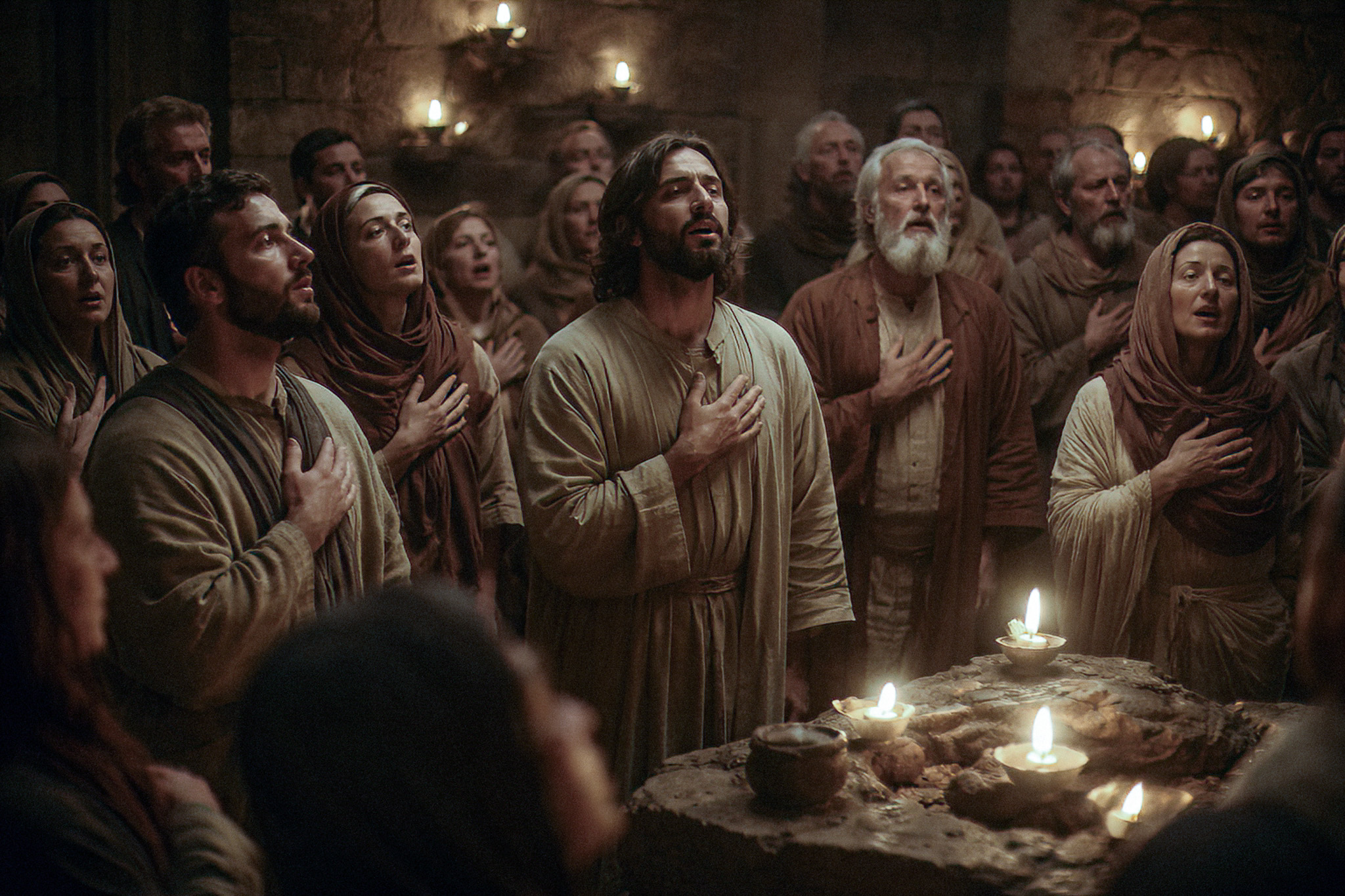
Long before any Gospel was written, before Paul penned his letters, and within a remarkably short time after the crucifixion, Christians were already confessing Jesus in ways that place Him squarely within the divine identity of Israel’s God. These early creeds are not later theological reflections. They are confessional material that predates the New Testament documents and gives us direct access to what the earliest Christians believed and proclaimed.
Creeds Before the New Testament
A creed is a concise, memorized confession of belief used in teaching, worship, baptism, and communal proclamation. Scholars across the theological spectrum recognize that the New Testament preserves several such creeds and hymns that Paul and other writers did not invent but received and passed on. Paul explicitly signals this in places where he uses technical language for the transmission of tradition, most notably in 1 Corinthians 15:3, where he says, “For I delivered to you as of first importance what I also received.”
What makes these creeds so significant is their dating. Even skeptical and agnostic scholars widely agree that several of these confessional formulas emerged extremely early, in some cases within months of the crucifixion and certainly within the first five years. This places high Christology at the very beginning of the Christian movement, not at its end.
Scholarly Consensus Across Worldviews
This conclusion is not limited to conservative or evangelical scholars. It is one of the most striking points of agreement in modern New Testament studies.
Larry Hurtado argued that devotion to Jesus erupted suddenly and early, forming what he famously called a “mutation” within Second Temple Jewish monotheism rather than a gradual evolution.¹
Richard Bauckham demonstrated that the earliest Christians included Jesus within the unique divine identity of YHWH rather than treating Him as a secondary or lesser deity.²
Martin Hengel concluded that the development of Christology occurred so rapidly that it must be traced to the earliest Palestinian Christian community itself.³
James Dunn, while more cautious in his formulations, nonetheless acknowledged that belief in Jesus’ exalted status and divine role emerged at a very early stage and was already embedded in the worship and proclamation of the first Christian communities. Dunn explicitly recognized that these traditions were circulating prior to Paul’s letters and reflect convictions held by the earliest believers.⁴
Even more striking is the agreement from critical and skeptical scholars. Gerd Lüdemann, an agnostic New Testament scholar, affirmed that the core resurrection and exaltation traditions found in Paul originated within the first two to five years after Jesus’ death.⁵ Lüdemann did not believe Christianity was true, yet he acknowledged that these beliefs were early, sincere, and foundational to the movement from the start.
This means that belief in Jesus’ exalted status was not the result of legendary accretion. It was the starting point.
The Philippians Hymn and Divine Identity
One of the most important early creeds is preserved in Philippians 2:6–11. Virtually all scholars agree that this passage is a pre Pauline hymn that Paul quotes rather than composes. The language, rhythm, and structure mark it as liturgical material already in circulation.
This hymn describes Jesus as existing in the “form of God,” humbling Himself, and then being exalted so that every knee bows and every tongue confesses that Jesus Christ is Lord. This is not generic lordship. The language is drawn directly from Isaiah 45:23, a passage where YHWH declares that every knee will bow to Him alone.
For Jewish believers steeped in the Hebrew Scriptures, applying this text to Jesus was not poetic exaggeration. It was a theological claim of the highest order. To confess Jesus as “Lord” in this context was to identify Him with the God of Israel. There is no evidence of hesitation, debate, or gradualism in this confession. It appears fully formed at the earliest level of Christian worship.
Romans 1 and Pre Pauline Confession
Romans 1:3–4 preserves another early formula describing Jesus as descended from David according to the flesh and designated Son of God in power by His exaltation. The parallelism and compact theology point to an inherited confession rather than original composition.
This creed affirms both Jesus’ genuine humanity and His exalted status. It reflects an already developed Christology that holds together incarnation, messianic fulfillment, and divine authority. Again, this belief predates Paul’s missionary work and therefore predates the writing of Romans itself.
Early Creeds Preserved in the New Testament
The New Testament contains multiple passages widely recognized as early creeds, hymns, or confessional formulas that predate the documents in which they appear. These include:
• 1 Corinthians 15:3–8 – A pre Pauline confession affirming Jesus’ death, burial, resurrection, and appearances
• Philippians 2:6–11 – A Christological hymn identifying Jesus with the divine identity of YHWH
• Romans 1:3–4 – A brief creedal statement on Jesus’ Davidic descent and exaltation
• 1 Timothy 3:16 – A likely liturgical confession used in early Christian worship
• Romans 10:9 – A concise confessional formula declaring Jesus as Lord
• 1 Corinthians 8:6 – A reformulation of the Shema that includes Jesus within Israel’s monotheistic confession
What makes these early creeds even more striking is not merely how early they appear, but what they already affirm. From these pre New Testament confessions alone, before any Gospel was written, we can already say with confidence that the earliest Christians believed Jesus was far more than a teacher or prophet.
From these creeds we learn that Jesus was understood to preexist His earthly life, existing in the “form of God” prior to His incarnation. This is not language of exaltation alone, but of divine status preceding humiliation. The earliest believers did not think Jesus became divine later; they believed He willingly entered human history already possessing divine identity.
We also learn that Jesus was worshiped in ways reserved for God alone. These confessions functioned in corporate worship settings, where prayer, praise, and allegiance were directed toward Jesus without hesitation. In a Second Temple Jewish context—where worship was fiercely guarded—this inclusion of Jesus is extraordinary.
The creeds further reveal that Jesus was identified with YHWH Himself. When Old Testament passages explicitly referring to the God of Israel are applied directly to Jesus, especially in confessions declaring Him “Lord,” the implication is unmistakable. This is not honorary language. It is covenantal and divine language, placing Jesus within the unique identity of Israel’s God rather than alongside Him.
We also learn that Jesus was viewed as the agent of God’s saving action. His death is consistently framed as purposeful and redemptive, not accidental or merely tragic. The creeds assume that Jesus’ death had theological meaning and cosmic significance, something only possible if He is more than a mere human representative.
Additionally, these confessions show that Jesus was believed to reign and to share in God’s authority. The exaltation language does not depict Jesus as promoted to a lesser heavenly role, but as one who now receives universal allegiance. Every knee bowing and every tongue confessing allegiance to Jesus reflects divine sovereignty, not delegated honor alone.
Finally, these early creeds assume that allegiance to Jesus was central to Christian identity itself. To confess Jesus as Lord was not a secondary belief or later doctrinal refinement. It was the defining mark of what it meant to be Christian from the very beginning.
Taken together, this means that the highest claims about Jesus were not the result of centuries of theological reflection. They were present at Christianity’s birth. The New Testament writers did not elevate Jesus. They bore witness to a confession already being proclaimed, prayed, and sung.
To see just how early these convictions emerged, it helps to place them within their historical setting.
A Brief Historical Timeline for Context
Crucifixion and Resurrection of Jesus
Formation and circulation of early Christian creeds and hymns
Earliest letters of Paul written (1 Thessalonians, Galatians, Corinthians, Romans), reflecting already established beliefs
Composition of the Gospels within the lifetime of eyewitnesses
Destruction of the Jerusalem Temple
This timeline underscores a crucial point: high Christology predates the New Testament texts themselves. The documents did not invent belief in Jesus’ divine status. They recorded what Christians were already confessing.
What These Creeds Tell Us About Jesus
When we examine these early creeds together, several conclusions emerge with remarkable clarity.
First, Jesus was worshiped. These confessions functioned in corporate settings where worship was directed toward Him in ways reserved for God alone.
Second, Jesus was identified with YHWH. The application of Old Testament Yahweh texts to Jesus is not accidental or metaphorical. It reflects a deliberate theological move rooted in Jewish monotheism, not pagan influence.
Third, Jesus’ divine status was not inferred slowly from later reflection. It was proclaimed immediately as part of the earliest Christian message.
Fourth, these beliefs existed before any New Testament book was written. The creeds represent Christianity in its oral, formative stage, when belief was transmitted through memorized confession rather than written Scripture.
Finally, the resurrection functions as the catalyst, not the invention. While the resurrection is essential to understanding why these beliefs emerged, the creeds themselves are not elaborate resurrection narratives. They are theological declarations about who Jesus is, grounded in the conviction that God had acted decisively in Him.
Why This Matters Today
The claim that Jesus’ divinity is a late invention cannot survive serious historical scrutiny. The earliest Christians, all of whom were Jewish monotheists, confessed Jesus in language reserved for God within months and years of His death. This confession did not arise in theological councils or philosophical debates. It arose in worship, prayer, and proclamation.
The New Testament did not create high Christology. It preserved it.
From These Earliest Creeds Alone, We See That the First Christians Believed Jesus:
Preexisted His earthly life, existing prior to His incarnation
Was the Messiah, fulfilling Israel’s hopes and promises
Was equal with the Father, sharing divine status rather than merely exalted honor
Was called YHWH, as Old Testament texts referring to Israel’s God were applied directly to Him
Was worshiped, receiving devotion reserved for God alone within Jewish monotheism
Was resurrected, not symbolically but bodily, by God’s action
Was physically seen, appearing to named eyewitnesses and groups
Was the agent of salvation, whose death was understood as redemptive and purposeful
Shared divine authority, receiving universal allegiance and confession
Defined Christian identity, such that allegiance to Him marked the earliest believers
When Christians confess today that Jesus is Lord, they are not echoing a fourth century creed imposed on the faith. They are repeating the earliest confession the Church ever made.
Endnotes
- Larry W. Hurtado, Lord Jesus Christ: Devotion to Jesus in Earliest Christianity (Grand Rapids: Eerdmans, 2003), 2–3.
- Richard Bauckham, Jesus and the God of Israel (Grand Rapids: Eerdmans, 2008), 8–12.
- Martin Hengel, The Son of God (Philadelphia: Fortress Press, 1976), 1–4.
- James D. G. Dunn, Christology in the Making (London: SCM Press, 1980), 49–60.
- Gerd Lüdemann, The Resurrection of Jesus: History, Experience, Theology (Minneapolis: Fortress Press, 1994), 171–174.
You also might enjoy reading these earlier blogs:
The Son of Man Is the Son of God
The Deity of Christ in the Gospel of Mark
Was the Gospel of John Written Before 70 AD?

Leave a Reply