

For centuries readers have asked a pressing question: How can the God revealed in Scripture command the conquest of Canaan as described in Deuteronomy 7, Deuteronomy 20, and the narrative accounts of Joshua 6 and 8? Critics allege genocide, indiscriminate slaughter, or ethnic cleansing. Even sincere Christians wrestle with the ethical implications of these texts.
A careful, context-grounded reading — rooted in Hebrew syntax, ancient Near Eastern history, and the supernatural worldview of Scripture — reveals something different from modern caricatures. The conquest is not about racial extermination, but about judgment on a morally corrupt religious system, driving out rather than killing all, and confronting the last strongholds of the giant clans, who represent both human violence and spiritual rebellion in the biblical storyline.
The Conquest Was Not Ethnic Genocide, but Judgment on a Corrupt Culture
The biblical text never condemns Canaanites because of ethnicity. Instead, the focus is on actions — particularly violence, exploitation, and child sacrifice. God’s patience is explicit: He delays judgment for four centuries (Gen. 15:13–16), proving this has nothing to do with race and everything to do with entrenched evil.
Dr. Michael Heiser, a Hebrew scholar and Ancient Near Eastern specialist, emphasizes that Canaanite culture belonged to the “Deuteronomy 32 worldview,” a biblical framework in which, after the scattering at Babel, God allotted the nations to lesser spiritual beings – elohim (Deut. 32:8–9; Ps. 82) while taking Israel as His own. In this worldview, the nations came under the influence of hostile supernatural powers — what we would today call demonic beings — who distorted worship, justice, and morality, producing systems that harmed human flourishing. In effect, God “gave them over” to the very spiritual powers they desired to serve. The Canaanite religious structure, therefore, was not merely human corruption but part of a larger spiritual rebellion embedded in the land itself. The conquest was thus the removal of a spiritually—and morally—corrupt system, not the eradication of an ethnic people.
The Conquest Targeted the Giant Clans (Nephilim/Rephaim) as Remnants of Primeval Rebellion
One crucial but often overlooked element is that the conquest of Canaan involved the elimination of giant clans — the Anakim, Rephaim, Emim, Zamzummim, and others — who are repeatedly linked to the Nephilim tradition of Genesis 6:1–4. This is not mythology; Scripture consistently identifies these clans as the main occupants of the specific regions Israel is commanded to attack.
- The spies report seeing Anakim “the descendants of the Nephilim” in Canaan (Num. 13:32–33).
- Moses notes that the Emim and Zamzummim were considered Rephaim, giant clans, with supernatural associations (Deut. 2:10–11, 20–21).
- Joshua’s campaigns repeatedly mention the driving out or destruction of Anakim in key fortified areas (Josh. 11:21–22).
Why does this matter? Because the biblical worldview presents these groups as direct continuations of earlier spiritual rebellion, embodying a fusion of human hostility and demonic influence that shaped the moral and religious landscape of Canaan. Ignoring this backdrop strips the conquest narratives of their theological logic. It is both textually and culturally dishonest to interpret the Conquest apart from the framework already established in prior Scripture, where these beings and their descendants are portrayed as central to the corruption that Israel was commanded to confront.
Heiser writes:
“Israel’s wars of conquest were not random acts of aggression but the reclaiming of sacred space polluted by the offspring of supernatural rebellion.”
This backdrop reframes the conquest not as mere human-versus-human conflict, but as the final stage of God reclaiming His land from the corrupting influence of the giant clans, who embodied violence, oppression, and spiritual opposition. According to the biblical narrative, the corruption associated with these beings was the very cause of the Flood in Genesis 6; and while the post-Flood world did not experience the same global level of spiritual “pollution,” Scripture affirms that a renewed but geographically limited resurgence of these clans took root in the land of Canaan. Because their presence was localized rather than universal, the judgment was likewise localized — directed not at the whole world, as in the days of Noah, but at the specific regions where these giant clans had re-established themselves within the Holy Land.
Their presence explains:
- why certain regions were specifically targeted,
- why the language of “devoting to destruction” (Heb: חֵרֶם ḥerem) is used in those areas,
- and why non-giant populations were often spared or allowed to remain.
The focus is theological and spiritual, not racial.
[Note: Although no intact skeletal remains of the giant clans have been recovered — an unsurprising reality given soil conditions, tomb looting, and the general rarity of complete ancient skeletons — archaeology nevertheless provides strong supporting evidence consistent with the biblical picture of the Anakim and Rephaim. Sites associated with these groups (Hebron, Gath, Bashan) exhibit unusually large fortifications and elite warrior architecture; inscriptions from Gath contain names linguistically parallel to “Goliath”; Ugaritic texts reference the rpum, a term aligned with the biblical Rephaim as an elite warrior class; and megalithic structures in Bashan (e.g., Rujm el-Hiri) reflect a powerful, ancient culture matching the biblical descriptions. I plan to address this evidence in greater detail in a future article. The Bible also provides concrete size descriptions for some members of these giant clans — not fantastical heights like Jack and the Beanstalk, but figures reflecting extraordinarily tall warrior elites by ancient Near Eastern standards. Goliath, for example, is described as standing six cubits and a span (1 Sam. 17:4), which most scholars estimate at roughly 9 to 9.5 feet; even using more conservative cubit calculations, he would still exceed 7 feet, towering above the average ancient Near Eastern male height of approximately 5 feet to 5 feet 6 inches. Similar implications arise in the descriptions of the Anakim and Rephaim, who are repeatedly portrayed as unusually large and imposing (Deut. 2:10–11; Josh. 14:12–15). These portrayals do not suggest mythological monsters but rather a distinct warrior caste whose exceptional stature, combined with military prowess and political dominance, made them formidable opponents in the eyes of ancient Israelites.]
The Primary Command Was to “Drive Out,” Not to Kill
While some passages describe warfare, the dominant instruction is expulsion, not extermination. God repeatedly emphasizes:
- “drive out” (Exod. 23:28)
- “dispossess” (Num. 33:52–55)
- “clear away gradually” (Deut. 7:22)
These statements make no sense if literal genocide were the goal. Many Canaanites remained in the land, intermarried with Israel, or joined themselves to Yahweh (Rahab, Gibeonites). This is moral purging of idolatry, not racial cleansing.
The Language of “Utter Destruction” Is Ancient Near Eastern (ANE) Hyperbole
Scholars across disciplines recognize that Joshua uses standard ANE warfare rhetoric, employing formulaic phrases like “left no survivor,” which signify decisive victory, not literal extermination. Judges proves this: the same populations allegedly “destroyed” are later alive.
This is not dishonesty; it is literary style. (For more concerning this see my articles: Hyperbole in the Ancient Near East, The Battle of Words, and When the Unseen Became Seen)
Israel Attacked Military Strongholds, Not Civilian Population Centers

Archaeology confirms that Jericho, Ai, Hazor, and similar “cities” mentioned in Joshua were in reality military garrisons or administrative citadels, not population centers filled with families, neighborhoods, or domestic life. These fortified structures functioned as royal enclaves, governing surrounding agricultural villages and enforcing the political and religious authority of Canaanite rulers. Their destruction, therefore, was not the indiscriminate slaughter of civilians but the dismantling of the political, military, and cultic strongholds that upheld Canaanite religious violence, including practices tied to fertility cults, ritual prostitution, child sacrifice, and — significantly — territorial dominance by the giant clans (such as the Anakim and Rephaim). In this light, the biblical narrative portrays targeted strikes against centers of oppressive power, not ethnic cleansing.
Leading archaeologist Bryant G. Wood notes this clearly in his analysis of Jericho:
“Jericho was not a large residential city at the time of Joshua, but a small military fort guarding the eastern approach to Canaan. Its destruction would therefore have had a primarily strategic and symbolic impact rather than representing the fall of a major civilian population.” – Bryant G. Wood, “The Archaeology of Jericho,” Biblical Archaeology Review 16, no. 2 (1990): 44–58)
Likewise, Old Testament scholar Richard S. Hess summarizes the archaeological pattern across multiple sites:
“The key Canaanite cities destroyed by Israel — Jericho, Ai, and Hazor — were administrative and military centers. Their populations consisted largely of soldiers, priests, and officials connected with the political and cultic system of the region, not typical family settlements.” – Richard S. Hess, Israelite Religions: An Archaeological and Biblical Survey (Grand Rapids: Baker Academic, 2007).
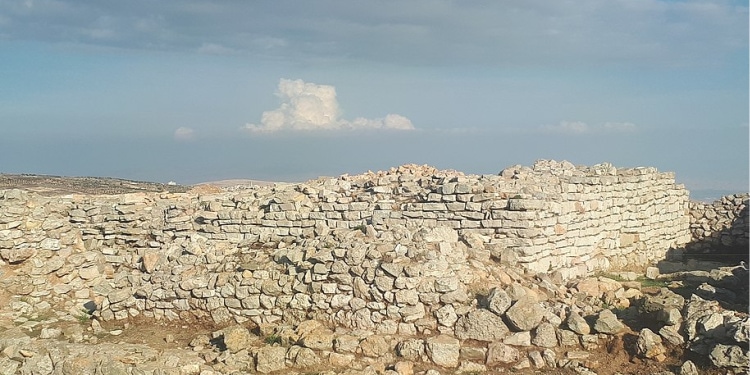
This evidence aligns with the biblical portrayal that Israel’s conquest focused on regions dominated by giant-clan influence and religious corruption, rather than on peaceful farming communities. The destruction of these garrisons represented the overthrow of entrenched systems of exploitation and spiritual rebellion—not the annihilation of ordinary Canaanite families who lived in the outlying villages.
Israel was dismantling entrenched systems of oppression, not massacring villages.
Mercy Was Always Possible
Rahab’s salvation — and the salvation of her entire extended family — demonstrates unmistakably that anyone who turned to Israel’s God could be spared, protected, and even fully integrated into Israel’s covenant community. Her story is not a minor footnote; it is a deliberate narrative signal that the conquest was never about ethnic removal but about turning from idolatry and aligning with the God of Israel. Rahab, a Canaanite woman living at the heart of a condemned city, responded in faith and was incorporated not only into Israel but into the very lineage of Israel’s Messiah. Likewise, the Gibeonites — though they approached Israel deceptively — were also spared and brought under Israel’s protection. Their preservation further underscores that judgment fell only on those who persisted in allegiance to violent and corrupt Canaanite religious systems. This recurring pattern confirms that the decisive issue was not ethnicity, geography, or ancestry, but spiritual allegiance: those who turned to the Lord found mercy, and those who clung to destructive practices faced judgment.
The Canaanites Were Not Innocent Bystanders
Canaanite society normalized:
- child sacrifice (Deut. 12:31),
- ritual prostitution,
- divination and necromancy,
- exploitation of the weak,
- systemic violence.
Paul Copan argues persuasively that the conquest narratives describe the dismantling of a corrupt and exploitative socioreligious system rather than an act of indiscriminate cruelty. In his analysis, the commands in Joshua target centers of power — royal fortresses, military garrisons, and cult complexes — rather than ordinary populations. Copan notes that God’s judgment is directed toward systemic wickedness that “destroyed families, exploited the vulnerable, and perpetuated moral and spiritual corruption.” Removing such systems was therefore an act of divine justice aimed at liberating the land from oppression, not an expression of divine violence for its own sake.
“Israel’s battles were directed against royal, military, and cultic centers that sustained a corrupt way of life. The point was not wiping out people groups wholesale but dismantling a violent and oppressive societal system.” – Paul Copan and Matthew Flannagan, Did God Really Command Genocide? (Grand Rapids: Baker Academic, 2014), 83–110.
Old Testament scholar Richard S. Hess affirms this same pattern, observing that Israel’s actions “were not directed against civilian populations but against key administrative and military centers that upheld Canaanite political and religious authority.” This understanding fits the archaeological evidence and aligns with the biblical portrayal that the conquest was not genocide but the surgical removal of a destructive, predatory system rooted in both human and supernatural rebellion.
“The biblical text consistently focuses on the destruction of fortified administrative centers rather than civilian populations. This reflects a judgment against entrenched powers, not ethnic groups.” – Richard S. Hess, Joshua: An Introduction and Commentary (Grand Rapids: Eerdmans, 1996), and Israelite Religions: An Archaeological and Biblical Survey (Grand Rapids: Baker Academic, 2007).
The presence of the giant clans — associated with supernatural rebellion —intensifies the picture of systemic corruption.
A One-Time Judgment, Not an Ongoing Mandate
God’s instructions are historically and theologically limited:
- one land,
- one generation,
- one specific religious and supernatural context,
- one purpose in redemptive history.
Israel never receives commands for ongoing conquest.
Judging Canaan Was the Same Standard by Which Israel Was Judged
When Israel later imitated the very practices for which Canaan was judged — including child sacrifice to Molech, sexual exploitation, and idolatrous rituals condemned throughout the Torah — they too were driven from the land (2 Kgs. 17; Jer. 7). The prophets make this point repeatedly: Israel was not given a permanent moral exemption. The same God who judged Canaan judged Israel when they embraced the same corruption. This reveals that divine judgment in Scripture is moral, not nationalistic; principled, not arbitrary; and utterly impartial. The land itself “vomited out” its inhabitants when they desecrated it, whether Canaanite or Israelite (Lev. 18:25–28). In other words, God’s standard is consistent — the people who perpetuate violence, idolatry, and exploitation face judgment, regardless of their ethnic identity.
Jesus Affirms Rather Than Apologizes for God’s Justice
Jesus Himself references the Flood and the destruction of Sodom as righteous acts of divine judgment, not as moral embarrassments or as events needing reinterpretation for a gentler age. He presents them as warnings, sober reminders of what happens when violence, injustice, and hardened rebellion reach their full measure. In doing so, Jesus affirms, not revises, the moral integrity of God’s past judgments. The God who confronted corruption in Noah’s generation and who acted against the depravity of Sodom is the same God revealed in Christ: holy in His character, patient in His dealings with humanity, and unwavering in His commitment to confront and ultimately defeat evil. Jesus’ teaching makes clear that divine judgment is not contrary to God’s love but an expression of His justice, His refusal to allow evil to rule unchallenged.
The Conquest Is Not Genocide but Holy Justice Against Evil and Spiritual Corruption
When read within its literary, historical, and supernatural context, the conquest reveals:
- Not ethnic genocide, but judgment on a deeply violent, exploitative, and demonically influenced culture.
- Not indiscriminate killing, but targeted removal of giant clans and corrupt strongholds.
- Not racial hatred, but moral and spiritual cleansing of the land.
- Not total extermination, but hyperbolic war rhetoric about decisive victory.
- Not blind violence, but the limited, redemptive work of a God reclaiming His world.
The inclusion of the giant clans (Nephilim/Rephaim) is not fringe, it is central to the theological logic of the conquest and helps modern readers understand why certain peoples, in certain places, at certain times, faced divine judgment.
This is not the story of a morally defective deity. It is the story of a holy God confronting entrenched evil, both human and supernatural, to preserve His redemptive plan for the world.
Endnotes
- John H. Walton, The Lost World of the Israelite Conquest (Downers Grove, IL: IVP Academic, 2017).
- Michael S. Heiser, The Unseen Realm: Recovering the Supernatural Worldview of the Bible (Bellingham, WA: Lexham, 2015), 113–140.
- Ibid., 95–113; and see Deut. 2:10–11, 20–21; Num. 13:32–33; Josh. 11:21–22.
- Heiser, The Unseen Realm, 176.
- Paul Copan and Matthew Flannagan, Did God Really Command Genocide? (Grand Rapids: Baker Academic, 2014), 83–110.
- Bryant G. Wood, “The Archaeology of Jericho,” Biblical Archaeology Review 16, no. 2 (1990): 44–58.
- Richard S. Hess, Israelite Religions: An Archaeological and Biblical Survey (Grand Rapids: Baker Academic, 2007).
- Paul Copan, Is God a Moral Monster? (Grand Rapids: Baker, 2011), 159–188.
 Tom's Theology Blog
Leave a comment