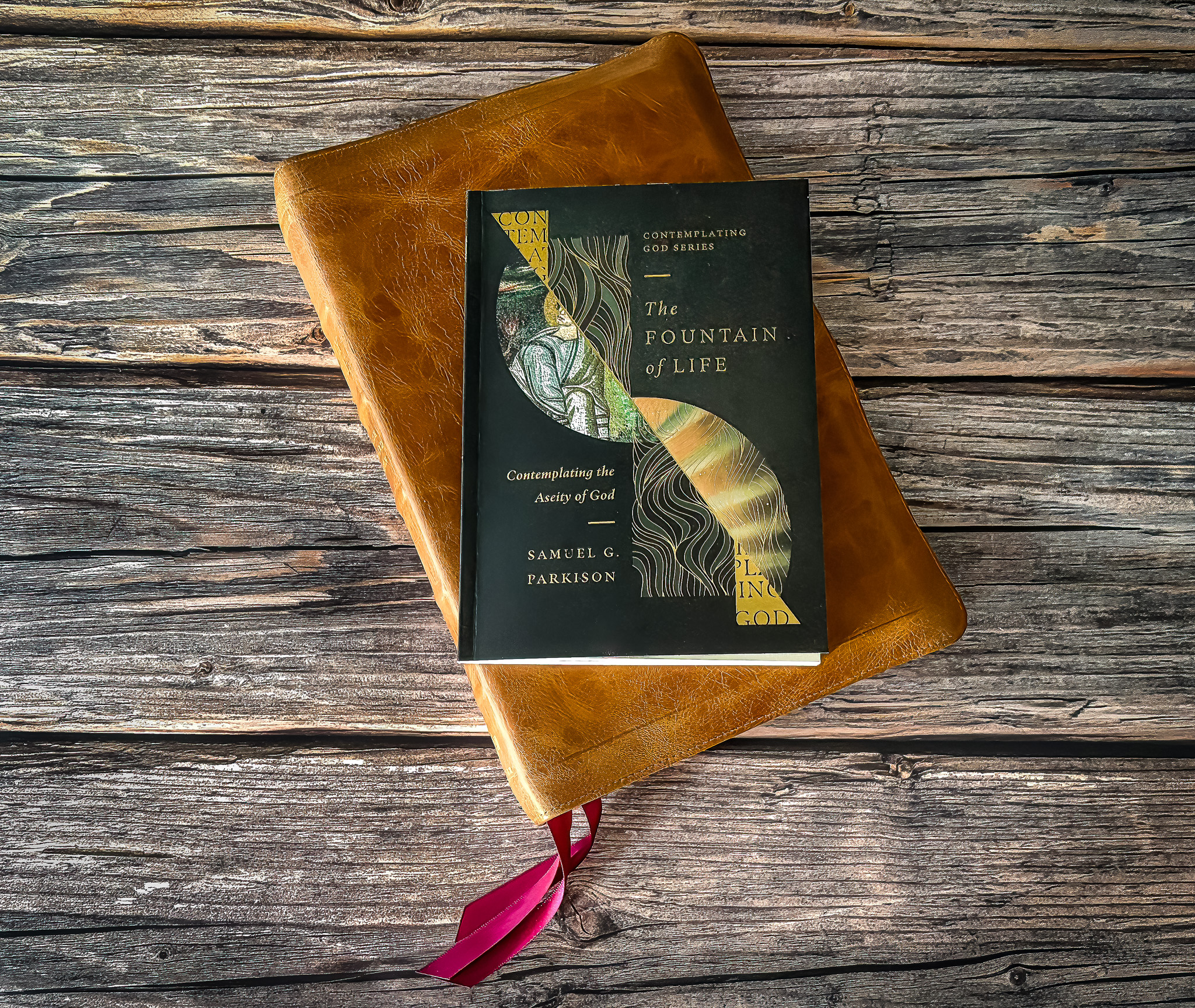
Samuel G. Parkison’s The Fountain of Life: Contemplating the Aseity of God (Crossway) is a small book that opens into immeasurable depths. In fewer than one hundred pages, Parkison accomplishes something rare: he takes one of the most profound and often intimidating doctrines in classical Christian theology and renders it luminous, worshipful, and pastorally nourishing.
The doctrine of divine aseity, God’s self existence and fullness of life in Himself, is not treated here as a cold metaphysical abstraction. From the opening chapter, “More Eternal,” Parkison frames theology as childlike wonder before the mystery of God. The simple but staggering insight that God is “more eternal” than the life He gives becomes the gateway to a meditation on what it means for God to be life in Himself. The writing is clear yet elevated, accessible yet deeply rooted in the great tradition of Christian thought.
One of the book’s strengths is its seamless integration of Scripture, classical creeds, and literary imagination. In the chapter “Come and See,” Parkison moves through John’s Gospel with careful theological sensitivity, showing how Christ reveals the inner life of the triune God. The Son has life in Himself, yet receives that life from the Father. The Spirit is breathed out, yet eternally divine. These are not presented as speculative puzzles but as invitations to behold the beauty of God’s life as an eternal communion of love.
Parkison’s engagement with the Nicene and Chalcedonian categories is particularly refreshing. He does not flatten the mystery, nor does he hide behind jargon. Instead, he carefully distinguishes between what is eternal and what is economic, between the life of God in Himself and God’s actions toward us. The result is a rich Trinitarian vision in which theology becomes doxology. The reader is repeatedly drawn not merely to understand but to adore.
Stylistically, the book is elegant and meditative. References to Dante, Malcolm Guite, and the wider Christian tradition enrich the reflection without overwhelming it. The tone is reverent but not heavy. Parkison writes as a theologian who delights in what he contemplates.
What makes this book especially valuable is its pastoral payoff. Aseity is not presented as a technical term to impress seminarians but as a truth that stabilizes and sweetens the Christian life. If God is life in Himself, then our salvation is participation in a life that is inexhaustible, unthreatened, and eternally joyful. The doctrine becomes not an abstract category but the fountain from which worship, assurance, and hope flow.
For readers who have longed for theology that is both intellectually serious and spiritually warm, this volume delivers. It is ideal for thoughtful laypeople, pastors, and students who want to grow in their grasp of classical Christian doctrine without losing the sense of awe that should accompany it.
This is not merely a book to read. It is a book to linger over. In contemplating God’s aseity, Parkison reminds us that theology at its best is not about mastering concepts but about being mastered by the glory of the living God.
(I received a copy of this book from Crossway in exchange for an honest review)

Leave a Reply